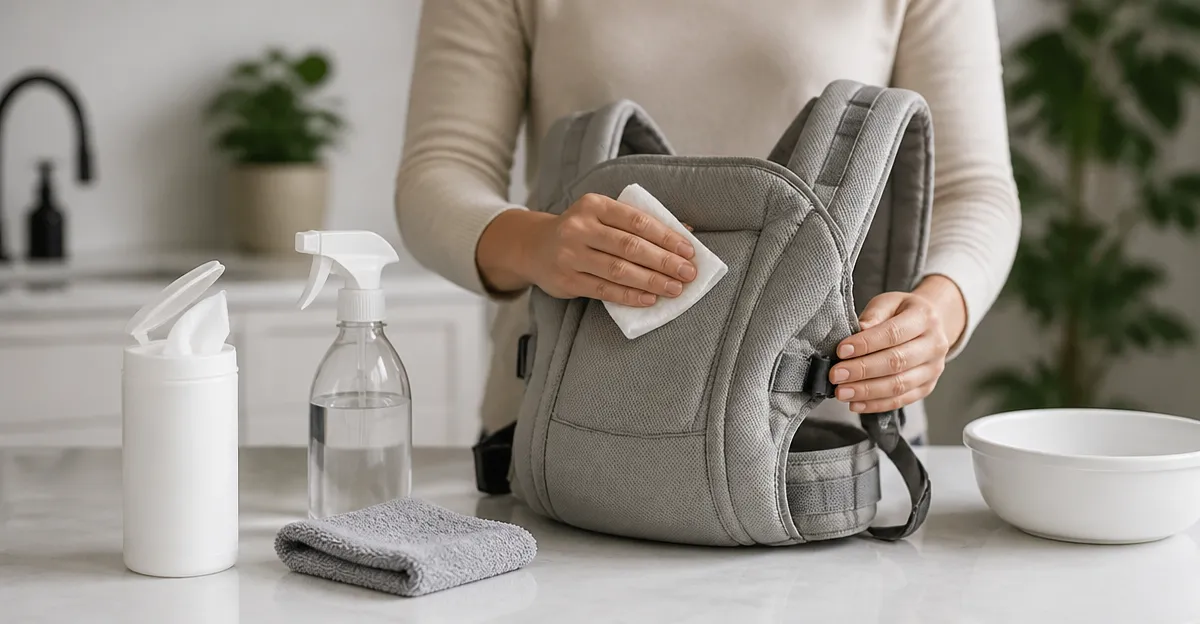
Introduction
This guide explains how to disinfect a baby carrier after possible norovirus contamination. Norovirus is highly contagious and can survive on fabric for several days, making thorough cleaning essential for infant health. The reader will learn a systematic approach that combines proper pre‑cleaning, effective disinfection, and safe drying techniques. By following these instructions, one can protect a newborn or toddler from reinfection while preserving the carrier’s longevity.
The steps are organized so that caregivers of any experience level can execute them without specialized training. In addition, the guide recommends several Amazon‑available carriers that simplify the cleaning process because of their machine‑washable fabrics and ergonomic designs. The recommendations are optional; the core method works with any carrier.
What You’ll Need
- Disposable gloves
- Mild detergent suitable for fabrics
- Bleach solution (5% sodium hypochlorite) or EPA‑approved hydrogen peroxide disinfectant
- Soft‑bristled brush
- Clean towels or microfiber cloths
- Large basin or washing machine
- Drying rack or clean indoor area
For carriers that are machine‑washable, a front‑loading washing machine is preferred to avoid excessive agitation. The following products are especially helpful because they are designed for easy cleaning and quick drying.
Step 1: Prepare a Safe Work Area
Begin by selecting a well‑ventilated space where the carrier can be laid flat without risk of cross‑contamination. Put on disposable gloves to protect your hands from both the virus and cleaning chemicals. Remove any detachable parts such as buckles, straps, or padding, and place them in a separate container for individual cleaning.
If the carrier is the Infantino Flip 4-in-1 Baby Carrier, the machine‑washable fabric and removable waist belt make this step straightforward. The carrier’s soft, breathable material tolerates gentle cycles, reducing the need for intensive hand scrubbing.
Step 2: Pre‑Clean to Remove Visible Debris
Use a soft‑bristled brush to dislodge any food particles, spit‑up, or diaper residue that may shield viruses from disinfectants. Work from the interior seams outward, paying particular attention to the head support and leg openings where moisture can accumulate.
For carriers with dense padding, such as the Momcozy PureHug Baby Carrier, the built‑in 3D EVA lumbar support is resistant to water damage, allowing a brief rinse before full immersion. The carrier’s cotton‑blend shell benefits from a quick hand rinse to prevent detergent buildup.
Step 3: Apply an Approved Disinfectant
Prepare a dilute bleach solution by mixing one tablespoon of regular household bleach with one quart of cool water, achieving a concentration of approximately 500 ppm, which is sufficient to inactivate norovirus on fabric. Alternatively, use an EPA‑registered hydrogen peroxide spray that is safe for textiles.
Submerge the carrier fully in the solution for at least five minutes, ensuring that all seams and folds are saturated. For the You+ME 4-in-1 Mesh Baby Carrier, the breathable mesh panels allow rapid penetration of the disinfectant, making a brief soak highly effective.
Do not exceed ten minutes of exposure, as prolonged bleach contact can weaken synthetic fibers over time. Rinse the carrier thoroughly with cool water to remove any residual chemicals.
Step 4: Machine Wash or Hand Wash
If the carrier is machine‑washable, place it in a front‑loading washer on a gentle cycle using cold water and a mild detergent. Add a cup of white vinegar to the rinse cycle to neutralize any lingering bleach odor. The Infantino Flip Luxe 4-in-1 Carrier features premium herringbone fabric that tolerates machine washing without pilling, preserving its aesthetic and structural integrity.
For non‑machine‑washable items, such as the KeaBabies Baby Wrap Carrier, hand wash gently in a basin with mild detergent, then rinse repeatedly until all soap is removed. The wrap’s stretchy, breathable fabric benefits from a gentle squeeze rather than wringing to maintain elasticity.
Step 5: Dry Completely Before Reassembly
After washing, gently press excess water from the carrier with a clean towel. Hang the carrier on a drying rack in a well‑ventilated area, avoiding direct sunlight which can fade colors. Ensure that the carrier is completely dry before reattaching buckles or straps, as residual moisture can promote mold growth.
The quick‑dry properties of the Infantino Flip 4-in-1 fabric reduce drying time, allowing caregivers to resume use within a few hours. For carriers with thicker padding, such as the Momcozy PureHug, allow an additional hour to guarantee that the EVA lumbar support is fully dry.
Tips & Pro Tips
- Always test a small inconspicuous area of the carrier with the disinfectant before full immersion to confirm colorfastness.
- Label the carrier with the date of disinfection to track cleaning frequency; norovirus can reappear if the carrier is reused without proper sanitation.
- Store the carrier in a clean, dry container when not in use to prevent accidental re‑contamination.
- If a carrier has a removable cover, wash the cover separately to ensure thorough cleaning of both layers.
- Consider using a portable UV‑C sanitizer for quick surface disinfection of buckles and metal hardware, especially when traveling.
Troubleshooting
Problem: Persistent odor after cleaning.
Solution: Add a half‑cup of baking soda to the final rinse cycle, or soak the carrier in a mixture of water and white vinegar for 30 minutes before the final rinse.
Problem: Stiff straps after drying.
Solution: Apply a small amount of fabric softener to a damp cloth and gently rub the straps, then rinse and dry again.
Conclusion
Disinfecting a baby carrier after norovirus exposure requires careful pre‑cleaning, appropriate chemical treatment, and thorough drying. By following the steps outlined above, caregivers can protect infants from reinfection while maintaining the carrier’s functionality and comfort. The recommended carriers—Infantino Flip 4‑in‑1, Momcozy PureHug, You+ME 4‑in‑1 Mesh, Infantino Flip Luxe, and KeaBabies Wrap—offer features that simplify cleaning and extend product life, but the method works with any carrier.
Regular sanitation, combined with vigilant hand‑washing practices, creates a safe environment for both baby and caregiver. Implement these practices consistently to ensure that every outing, grocery trip, or bedtime routine remains healthy and stress‑free.
Products Mentioned in This Guide
Frequently Asked Questions
How can I safely disinfect a baby carrier after possible norovirus exposure?
First wash the carrier with mild detergent, then apply a 5% bleach solution or EPA‑approved hydrogen peroxide disinfectant, rinse thoroughly, and dry completely.
Can I use regular household bleach to clean the carrier?
Yes, a diluted 5% sodium hypochlorite solution is effective, but follow the manufacturer’s instructions and rinse well to avoid fabric damage.
Is it necessary to wear gloves while cleaning the carrier?
Wear disposable gloves to protect your hands from pathogens and chemicals during pre‑cleaning and disinfection.
What if the carrier is not machine‑washable?
Hand‑wash it in a large basin using mild detergent, then soak in the disinfectant solution, rinse, and air‑dry on a clean rack.
How long should I let the carrier dry before using it again?
Allow the carrier to air‑dry completely, typically 2–4 hours, to ensure any residual disinfectant evaporates and the fabric is safe for the baby.