Introduction
Parents often wonder how to include an older sibling in the daily routine of babywearing without compromising safety. This guide explains the benefits of sibling involvement, outlines a clear step‑by‑step process, and recommends tools that make the experience smoother for the whole family. By following these instructions, caregivers can foster a sense of responsibility in the older child while maintaining proper ergonomics for both baby and adult.
Older siblings who feel trusted with a meaningful task are more likely to develop empathy and patience. At the same time, proper supervision and the right equipment prevent strain on the caregiver and protect the infant’s developing hips and spine. The following sections provide actionable guidance for parents who wish to teach this skill safely.
What You’ll Need
- A baby carrier that offers ergonomic support and adjustable fit.
- Clear visual aids such as printed diagrams or short video clips.
- A safe, spacious area free of sharp objects.
- Comfortable clothing for the caregiver and the older sibling.
- Optional accessories: storage pouch for diapers, a lightweight blanket.
The recommended carriers are listed in the final section and are linked at their first appearance.
Step 1: Explain the Concept to the Older Sibling
Begin by describing why babywearing is useful. Use simple language and compare the carrier to a “snuggly backpack” that keeps the baby close and calm. Emphasize that the older child will not be lifting the baby alone; instead, the caregiver will maintain control while the sibling assists with small tasks such as holding a strap or handing a diaper.
Encourage the child to ask questions. Answer each query honestly, reinforcing the idea that safety is the top priority. This conversation builds trust and prepares the sibling for the hands‑on portion of the lesson.
Step 2: Choose a Safe Carrier
Select a carrier that matches the family’s lifestyle and the baby’s size. For families seeking versatility, the Infantino Flip 4-in-1 Baby Carrier provides four carrying positions, adjustable straps, and lumbar support. It is priced at $29.15, holds babies from 8 to 32 lbs, and has a 4.6‑star rating from over 82,000 reviewers. The carrier’s padded shoulder straps distribute weight evenly, reducing strain on the caregiver while the older sibling observes.
If a softer, wrap‑style option is preferred for newborns, the Solly Baby Wrap offers a breathable TENCEL™ modal fabric that feels cool to the touch. Priced at $74.00 with a 4.7‑star rating, it supports babies 8‑25 lbs and promotes healthy hip positioning. The wrap’s one‑size‑fits‑all design allows caregivers of different body types to demonstrate proper wrapping techniques.
For parents who value premium materials and a sleek aesthetic, the BabyBjörn Harmony 3D Mesh Carrier combines a pressure‑relieving waist belt with a lightweight mesh fabric. At $211.00 and a 4.6‑star rating, it is ideal for warm climates because the mesh promotes airflow. The carrier supports newborns to toddlers (7‑40 lbs) and includes multiple carrying positions.
Families who enjoy outdoor activities may find the Bebamour Hip Seat Baby Carrier advantageous. Priced at $58.49 with a 4.7‑star rating, it features a hip‑seat design that relieves lower‑back pressure during extended wear. The carrier offers six adjustable positions, making it adaptable as the baby grows.
Step 3: Demonstrate Proper Positioning
With the chosen carrier, demonstrate how to secure the baby in an ergonomic “M” leg position. Explain that the baby’s thighs should be higher than the knees to support healthy hip development. Use the carrier’s visual markers—such as the Infantino’s convertible seat indicator or the Bebamour’s hip‑seat guide—to show the correct alignment.
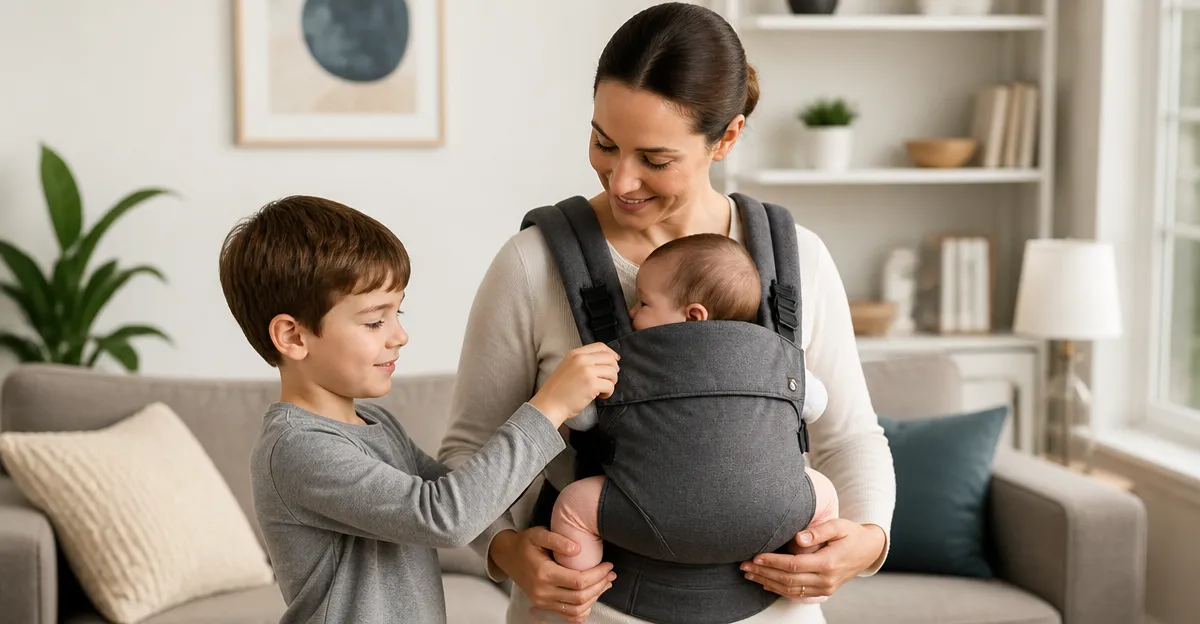
Invite the older sibling to observe each strap adjustment. Allow the child to touch the padded shoulder straps and feel the weight distribution while the caregiver remains the primary holder. This tactile experience reinforces learning without exposing the infant to risk.
Step 4: Supervise Initial Attempts
After the demonstration, let the older sibling assist by holding a strap or handing a diaper pouch. The caregiver should keep a firm grip on the carrier at all times. Begin in a low‑traffic area such as a living‑room carpet, where the child can practice without distractions.
Monitor the child’s posture. Encourage the sibling to stand tall, keep elbows close to the body, and avoid leaning over the baby. Provide gentle correction and praise for each correct action. This supervision phase typically lasts 10‑15 minutes before a short break is taken.
Step 5: Encourage Positive Interaction
While the caregiver walks, invite the older sibling to sing a lullaby or point out familiar objects. Positive verbal interaction helps the baby feel secure and teaches the sibling that their role is supportive, not dominant. Use the carrier’s convenient storage pocket—available on the Infantino and Bebamour models—to keep a small toy within reach, fostering shared play.
Document the experience with a short video. Review the clip together, highlighting moments when the sibling contributed positively. This visual feedback reinforces good habits and builds confidence.
Step 6: Gradual Independence
As the older sibling becomes comfortable, gradually increase their responsibilities. Transition from holding a strap to helping adjust the carrier’s waist belt under close supervision. The Bebamour’s adjustable waistband, which extends from 65 cm to 118 cm, makes this step straightforward for caregivers of varying sizes.
Maintain a routine where the sibling assists at least once per day. Consistency turns the activity into a habit, reducing the caregiver’s workload while preserving safety standards.
Tips & Pro Tips
- Always check that the carrier’s buckles are fully engaged before each use.
- Choose breathable fabrics for warm weather; the BabyBjörn mesh carrier excels in hot climates.
- Keep the carrier’s fabric clean; most models, including the Infantino and Bebamour, are machine‑washable after removing straps.
- Teach the older sibling to recognize signs of baby discomfort, such as fussing or red cheeks, and to alert the caregiver immediately.
- Use a timer to limit initial sessions to 10‑15 minutes, preventing caregiver fatigue.
Troubleshooting
Problem: The baby seems fussy in the carrier.
Solution: Verify that the baby’s hips are in the “M” position and that the carrier’s straps are not too tight. Adjust the waist belt or switch to a different carrying position, such as the facing‑in position on the Infantino.
Problem: The older sibling becomes impatient.
Solution: Shorten the session and provide a clear, visual cue—such as a colored sticker on the strap—to indicate when the child’s assistance is needed.
Conclusion
Teaching an older sibling to help with babywearing safely strengthens family bonds and distributes caregiving responsibilities. By selecting an ergonomic carrier, demonstrating proper positioning, supervising early attempts, and encouraging positive interaction, parents can create a secure environment for both baby and sibling. The step‑by‑step process outlined in this guide equips caregivers with the confidence to involve older children in daily routines while preserving safety.
Products Mentioned in This Guide
Frequently Asked Questions
How can I safely involve an older sibling in babywearing?
Start by demonstrating the carrier’s fit, then let the older child practice holding the carrier under close supervision while you maintain control of the infant.
What age is appropriate for an older sibling to help with babywearing?
Children aged 5 and up can begin assisting, provided they understand instructions and you assess their maturity and coordination.
What equipment do I need to teach an older sibling to assist with babywearing?
Use an ergonomic baby carrier with adjustable straps, visual aids like diagrams or videos, and optional accessories such as a diaper pouch for convenience.
How should I set up the environment for teaching babywearing to an older sibling?
Choose a safe, spacious area free of sharp objects, with soft flooring, and ensure both caregiver and child wear comfortable clothing.
What are the key safety checks before letting an older sibling help with babywearing?
Confirm the carrier is snug on the adult, the infant’s hips and spine are properly supported, and the older sibling can hold the carrier without strain before proceeding.