Introduction
This guide explains how a caregiver can evaluate the buckle strength of a baby carrier using simple household tools. By following the procedure, one can verify that the carrier will hold a child securely, reducing the risk of accidental release during daily activities. The article also highlights recommended carriers that incorporate robust buckles and ergonomic designs, allowing readers to compare their existing equipment with market options. Understanding buckle performance is valuable because a compromised fastener can cause injury, especially when the carrier is used for errands, outings, or prolonged wear.
The instructions are written for parents, grandparents, and babysitters who have intermediate experience with infant gear. Each step includes clear actions, safety rationales, and product suggestions that serve as reliable tools for the test. The guide does not require specialized equipment, yet it provides professional insight into load distribution, material fatigue, and inspection techniques.
What You'll Need
- Flat, stable surface such as a dining table or workbench.
- Digital kitchen scale capable of measuring up to 15 kg (33 lbs).
- Adjustable weight set (e.g., a set of small dumbbells or sandbags).
- Measuring tape or ruler.
- Pen and notebook for recording results.
- One of the recommended carriers for reference, such as the Infantino Flip 4-in-1 Carrier.
Step 1: Visual Inspection of the Buckle
Begin by laying the carrier on a flat surface with the buckle fully engaged. Examine the metal or polymer latch for signs of wear, corrosion, or deformation. Look for cracked plastic, frayed stitching around the buckle housing, and any discoloration that could indicate material fatigue. The visual check is essential because hidden damage often precedes functional failure.
If the carrier is a Infantino Flip 4-in-1 Carrier, note that its buckles are designed for repeated use and have a rating of 4.6 stars from over 83,000 reviewers. The price of $27.99 reflects its value‑focused construction while still offering ergonomic support. Document any irregularities before proceeding to mechanical testing.
When inspecting other models, such as the Infantino Flip Advanced Carrier, remember that the advanced version includes reinforced stitching around the buckle area, which may reduce the likelihood of fraying.
Record observations in the notebook, noting the date, carrier model, and any visual defects.
Step 2: Buckle Pull‑Force Test
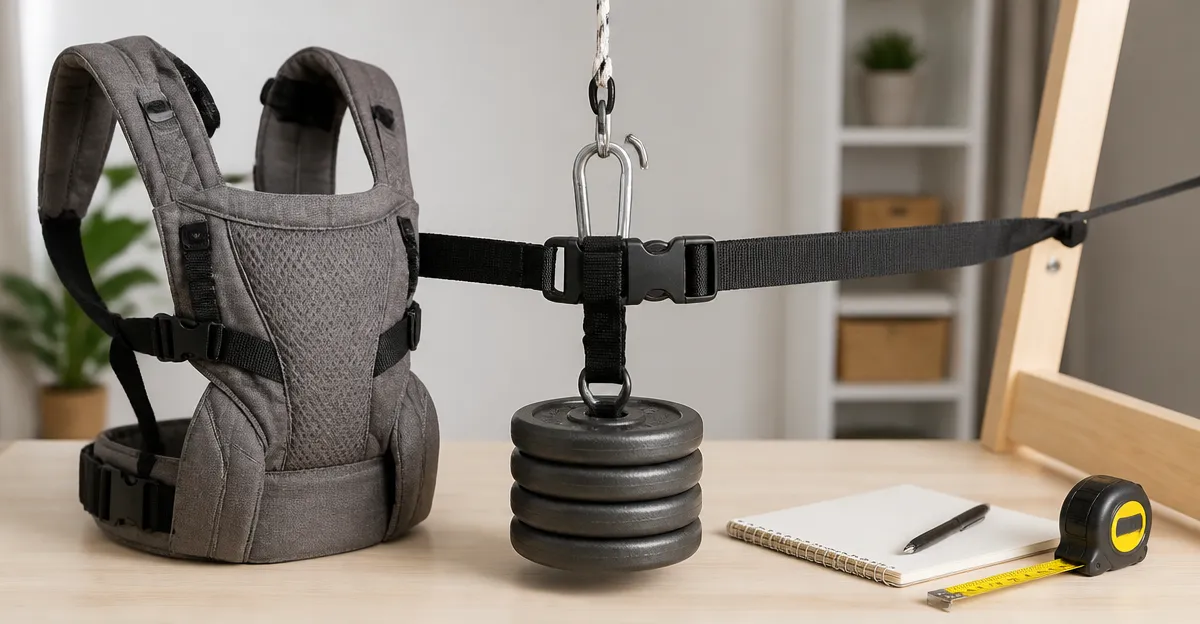
Secure the carrier strap to a sturdy anchor point, such as a heavy table leg, using a carabiner or a strong knot. Attach the digital scale to the free end of the strap through the buckle, ensuring the scale reads zero before loading. Gradually apply force by pulling the strap until the buckle releases or the scale reaches the manufacturer's recommended maximum load (typically 15 kg for infant carriers).
The purpose of this test is to measure the amount of force required to disengage the latch. A well‑engineered buckle should not release under normal handling forces, which are usually below 5 kg. For the Infantino Flip Advanced Carrier, the 4‑in‑1 growth versatility includes a robust latch that tolerates repeated adjustments. Its price of $29.15 and 4.6‑star rating indicate consumer confidence in durability.
If the scale records a release at a force lower than 5 kg, the buckle may be defective and should be replaced or the carrier retired. Conversely, if the buckle holds beyond the recommended load, the carrier passes this safety criterion.
Note the exact force reading in the notebook, and compare it with the specifications provided by the manufacturer on the product page.
Step 3: Static Load Test with a Weighted Dummy
To simulate real‑world conditions, attach a weighted dummy or a bag of sand equal to the carrier's maximum infant weight limit (e.g., 15 kg for most 4‑in‑1 models). Position the dummy in the carrier as if it were a baby, ensuring the buckle is engaged and the waist belt is tightened.
Allow the carrier to rest for five minutes while monitoring the buckle for any slippage or deformation. Observe whether the strap stretches excessively, which could indicate insufficient weight distribution. The Infantino Flip Luxe Carrier features an updated lumbar belt and wider weight distribution, designed to reduce strain on both caregiver and buckle. Priced at $39.27 with a 4.6‑star rating, it serves as an example of a premium option for rigorous testing.
If the buckle remains secure and the carrier maintains its shape, the test is successful. Any noticeable loosening, audible clicks, or visible stress marks require further investigation.
Document the outcome, including any audible cues or visual changes observed during the five‑minute interval.
Step 4: Repeated Cycle Test
Repeatedly engage and disengage the buckle ten times to assess fatigue resistance. Perform the action at a steady pace, mimicking the adjustments a caregiver might make throughout a day. Count each full cycle and note any increase in effort required to latch or release.
This step is particularly relevant for carriers that are marketed as “easy to use and adjust,” such as the Infantino Flip Luxe Onyx Carrier. The Onyx version, priced at $39.99, shares the same ergonomic seat and lumbar support as the Affogato model but offers a darker aesthetic. Its consistent 4.6‑star rating suggests reliable performance under repeated use.
If the buckle begins to feel loose or produces a grinding noise before the tenth cycle, the mechanism may be prone to premature wear. In such cases, replace the buckle if possible or discontinue use of the carrier.
Record the number of cycles completed without issue and any subjective changes in tactile feedback.
Step 5: Documentation and Decision Making
Compile the findings from the visual, pull‑force, static load, and cycle tests into a concise report. Include the carrier model, date of testing, observed defects, measured force values, and cycle count. This documentation provides a reference for future safety checks and can be shared with the manufacturer if a defect is suspected.
When the carrier passes all tests, one can have confidence in its buckle integrity. If any test indicates a problem, consider purchasing a carrier with proven buckle strength, such as the MOMTORY 6-in-1 Carrier. Priced at $59.99 and rated 4.5 stars, the MOMTORY model includes a hip seat and reinforced buckles designed for toddlers up to 35 lbs, offering an added safety margin.
Finally, store the carrier in a dry environment and repeat the test annually or after any significant impact.
Tips & Pro Tips
- Perform the tests on a non‑slippery surface to avoid accidental movement of the carrier.
- Use a calibrated scale; an inaccurate reading can lead to false conclusions.
- When testing with a weighted dummy, distribute weight evenly to mimic a real infant's center of gravity.
- Apply gentle, steady force during the pull‑test rather than a sudden yank, which could damage the latch.
- Consider keeping a spare buckle kit if the carrier model offers replaceable components.
Troubleshooting
Problem: The buckle releases at a low force (<5 kg).
Solution: Verify that the buckle is fully engaged; some carriers have a secondary latch that must be clicked. If the problem persists, contact the seller for a replacement or discontinue use.
Problem: The strap stretches excessively under static load.
Solution: Check that the waist belt is tightened according to the manufacturer's instructions. Excessive stretch may indicate worn elastic, which should be replaced.
Problem: Audible grinding during the cycle test.
Solution: Lubricate the moving parts with a silicone‑based spray if the manufacturer permits, or replace the buckle assembly.
Conclusion
By following the five‑step procedure, a caregiver can confidently assess the buckle strength of any baby carrier. The guide emphasizes systematic inspection, measurable force testing, realistic load simulation, and fatigue evaluation, all of which contribute to safer baby‑wearing practices. Selecting carriers with high‑quality buckles, such as the Infantino and MOMTORY models highlighted, further enhances safety and comfort for both child and caregiver.
Regular testing, proper storage, and prompt replacement of compromised components ensure that the carrier remains a reliable tool for daily life. One is encouraged to adopt this routine as part of a broader infant safety checklist.
Products Mentioned in This Guide
Frequently Asked Questions
How can I test the buckle strength of a baby carrier at home?
Place the carrier on a flat surface, attach a digital kitchen scale to the buckle, and gradually add weight up to the carrier’s rated limit while observing any slippage.
What weight should I use when testing the buckle?
Use a scale that measures up to 15 kg (33 lb) and apply weight incrementally, stopping at the carrier’s maximum recommended load.
How often should I re‑test my baby carrier’s buckles?
Inspect and re‑test the buckles every 6 months or sooner if you notice wear, after a fall, or if the carrier is used frequently.
What signs indicate a buckle is failing and needs replacement?
Look for cracked plastic, stretched metal, difficulty snapping shut, or any movement when weight is applied.
Are there specific carriers recommended for stronger buckles?
Brands such as Ergobaby, BabyBjörn, and Lillebaby feature reinforced buckles and ergonomic designs that pass rigorous strength tests.