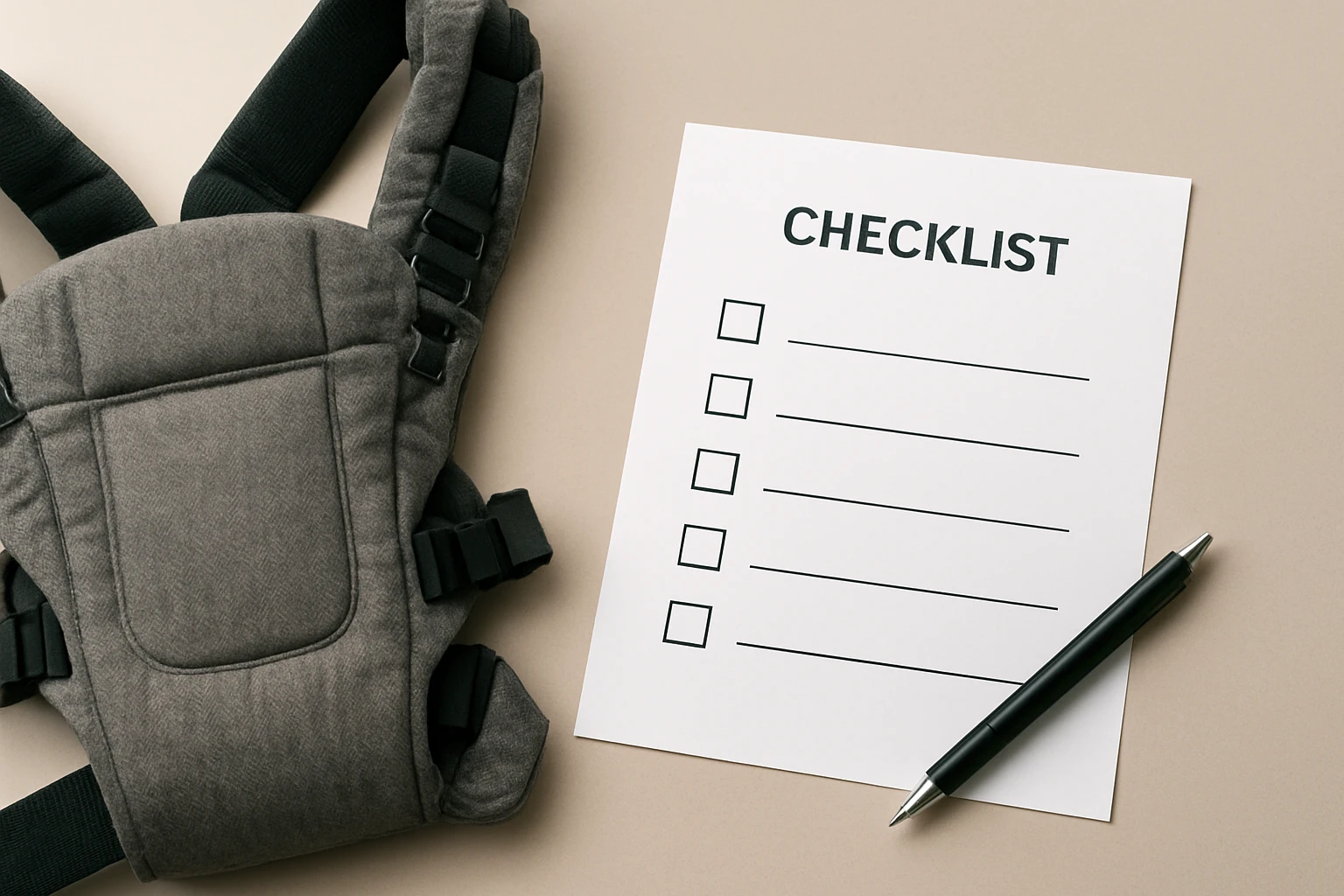
Secondhand Baby Carrier Safety Checklist: The Essential Parent’s Guide to Inspecting & Testing Used Carriers
Introduction
Parents who consider purchasing a pre‑owned baby carrier often wonder about safety, durability, and comfort. This guide explains the scope of secondhand carrier inspection, outlines a systematic checklist, and highlights key considerations that protect both infant and caregiver. Readers will learn how to evaluate structural integrity, examine fabric condition, verify hardware functionality, and test ergonomic support before making a purchase. By following the steps outlined herein, one can confidently acquire a reliable carrier while avoiding hidden hazards.
Background and Context
Baby carriers have evolved from simple cloth wraps to engineered ergonomic systems that support a newborn’s cervical spine and a toddler’s hip development. Modern carriers incorporate features such as head and neck support, three‑point weight distribution, and breathable fabrics. Understanding these fundamentals is essential when assessing a used item because many safety concerns stem from wear, improper adjustment, or missing components. Regulatory bodies such as the Consumer Product Safety Commission (CPSC) require manufacturers to meet specific load‑bearing standards; however, a secondhand carrier may no longer meet those standards if seams have frayed or buckles have corroded.
Core Inspection Checklist
The following checklist breaks the inspection process into four logical categories: structural assessment, fabric evaluation, hardware verification, and functional testing. Each category includes actionable items that a parent can perform without specialized tools.
1. Structural Assessment
- Inspect the carrier frame (if present) for cracks, bends, or corrosion. Plastic shells should be rigid; any flex indicates potential failure.
- Examine the stitching on seams and reinforced areas. Double‑stitched seams must be intact without loose threads.
- Check the waist and shoulder straps for uniform width. Uneven tapering may cause pressure points during use.
- Verify that the carrier retains its original ergonomic "M" or "C" shape as described by the manufacturer.
2. Fabric Evaluation
- Run a hand over the material to detect thinning, pilling, or discoloration. Soft, breathable fabrics such as those used in the GROWNSY Ergonomic Baby Carrier should feel similar to a mother’s embrace.
- Look for signs of mold, mildew, or odor, especially if the carrier was stored in a damp environment.
- Confirm that any removable padding is clean and free of tears. Padding contributes to head support and should be replaceable if damaged.
- Check that the fabric is machine‑washable according to the care label; many carriers, including the Infantino Flip 4‑in‑1 Baby Carrier, are designed for easy cleaning.
3. Hardware Verification
- Test all buckles, clips, and Velcro closures by pulling them apart and re‑engaging them. They must lock securely without slipping.
- Inspect the head and neck support mechanisms for hinges or adjustable tabs. Ensure they move smoothly and lock in place.
- Examine the waist belt for proper tension adjustment. An EVA waist support should distribute weight evenly across the hips.
- Confirm that any safety tags or labels are intact; missing tags may indicate that the carrier has been altered.
4. Functional Testing
- Place a weighted object equivalent to the carrier’s maximum load (e.g., a 20‑lb sandbag) in the carrier and observe any sagging or strain on seams.
- Simulate the "M" hip position by positioning the object’s legs in a spread‑squat stance; the carrier should maintain the angle without forcing the hips outward.
- Perform a quick “hands‑free” trial by wearing the carrier for at least five minutes while walking on a flat surface. Note any discomfort on shoulders, back, or hips.
- Check for any rattling or loose components that could become hazards during active use.
Recommended Products for Secondhand Buyers
While the checklist applies to any carrier, certain models provide features that simplify inspection and enhance long‑term safety. The following products are highlighted because they incorporate robust construction, clear adjustment mechanisms, and high customer satisfaction.
GROWNSY Ergonomic Baby Carrier
This carrier supports infants from 7 to 44 lb and includes a foldable head and neck support, an "M" shaped posture design, and EVA waist reinforcement. It holds a rating of 4.6 stars from 432 reviews, indicating consistent performance across a wide user base. Key specifications include:
- Weight capacity: 7‑44 lb (0‑36 months)
- Adjustable waist and shoulder straps for customized fit
- Soft, breathable fabric that mimics a mother’s embrace
- Three‑point support system with X‑shaped back reinforcement
- Price: $39.98
Because the carrier features a removable head support, a secondhand buyer can easily verify the integrity of the hinge and replace the padding if necessary.
Infantino Flip 4‑in‑1 Baby Carrier
The Infantino model offers four convertible carrying positions, a padded waist belt, and a wide shoulder strap system that distributes weight evenly. With 81,401 reviews and a 4.6‑star rating, it is one of the most trusted carriers on the market. Notable attributes include:
- Weight capacity: 8‑32 lb (newborn to toddler)
- Four ergonomic positions: facing‑in narrow, facing‑in wide, facing‑out, and back carry
- Adjustable seat that maintains the pediatric‑recommended "M" hip position
- Machine‑washable, breathable fabric
- Price: $37.97
This carrier’s modular design makes it straightforward to test each position during the functional testing phase of the checklist.
Comparison and Selection Guide
When choosing a secondhand carrier, parents should weigh three primary factors: safety features, growth adaptability, and ease of maintenance. The table below summarizes how the two featured carriers compare across these dimensions.
| Criterion | GROWNSY Ergonomic | Infantino Flip 4‑in‑1 |
|---|---|---|
| Weight Range | 7‑44 lb (0‑36 months) | 8‑32 lb (newborn‑toddler) |
| Head/Neck Support | Foldable head and neck cradle | Adjustable head support in facing‑in positions |
| Hip Position | "M" shape ergonomic design | Convertible seat with "M" position |
| Adjustability | Waist and shoulder straps fully adjustable | Custom‑fit straps, buckles, and seat settings |
| Cleaning | Soft breathable fabric, machine washable | Machine washable, quick‑wipe surface |
| Average Rating | 4.6/5 (432 reviews) | 4.6/5 (81,401 reviews) |
| Price | $39.98 | $37.97 |
For families that anticipate rapid growth from newborn to toddler, the GROWNSY carrier offers a broader weight range. Parents who value multiple carrying positions may prefer the Infantino Flip because of its four‑mode versatility.
Best Practices & Tips for Safe Use
- Register the carrier with the manufacturer to receive safety alerts and recall notifications.
- Always follow the recommended weight limits; exceeding them compromises structural integrity.
- Re‑adjust straps each time the carrier is used to accommodate changes in the infant’s size and caregiver posture.
- Perform a quick visual inspection before each use, focusing on buckles, seams, and fabric wear.
- Store the carrier in a dry, temperature‑controlled environment to prevent mold growth.
- When possible, keep the carrier’s original manual; it contains model‑specific safety diagrams.
- Consider purchasing a replacement head support or padding kit if the original components show signs of wear.
Frequently Asked Questions
1. Can I use a secondhand carrier for a newborn?
Yes, provided the carrier includes a foldable head and neck support, the straps are fully adjustable, and the fabric shows no signs of degradation. Newborns require additional head support because their cervical muscles are not fully developed.
2. How often should I replace a used carrier?
Replace the carrier when any structural component fails the checklist, when seams begin to fray, or when the manufacturer issues a recall. Regular visual inspections will help determine the appropriate replacement timeline.
3. Are there any brands that are unsafe for secondhand use?
Brands that rely on single‑piece plastic shells without reinforcement or that lack clear weight‑limit labeling should be approached with caution. Always verify that the model complies with current CPSC standards.
4. What is the best way to clean a used carrier?
Most modern carriers, including the two featured models, are machine‑washable on a gentle cycle. Use a mild detergent, avoid fabric softeners, and air‑dry to preserve elasticity.
5. Does the carrier’s color affect safety?
pColor does not impact structural safety, but lighter colors may reveal stains or wear more readily, aiding visual inspection. Dark colors can conceal fabric thinning, so extra tactile checks are advisable.
6. Can I modify a secondhand carrier to improve safety?
Minor adjustments such as replacing worn buckles with OEM‑approved replacements are acceptable. Do not alter the carrier’s ergonomic geometry, as this could compromise hip support.
Conclusion
Inspecting a secondhand baby carrier requires diligence, knowledge of ergonomic principles, and a systematic checklist. By evaluating structure, fabric, hardware, and functionality, one can ensure that a pre‑owned carrier provides the same level of protection as a new product. The GROWNSY Ergonomic Baby Carrier and Infantino Flip 4‑in‑1 Baby Carrier exemplify models that balance safety, adaptability, and ease of maintenance, making them ideal candidates for thorough inspection. Armed with the guidelines in this article, parents can make informed purchasing decisions, safeguard their infants, and enjoy the convenience of hands‑free babywearing.
Products Featured in This Guide
GROWNSY Ergonomic Baby Carrier
Price: $39.98 | Rating: 4.6/5 (432 reviews)
Featured because it offers a foldable head and neck support, a three‑point ergonomic system, and a wide weight range that accommodates newborns through toddlers.
Infantino Flip 4-in-1 Baby Carrier
Price: $37.97 | Rating: 4.6/5 (81,401 reviews)
Featured because it provides four convertible carrying positions, adjustable ergonomic seat, and a padded waist belt that distributes weight evenly, making it versatile for growth stages.