Introduction
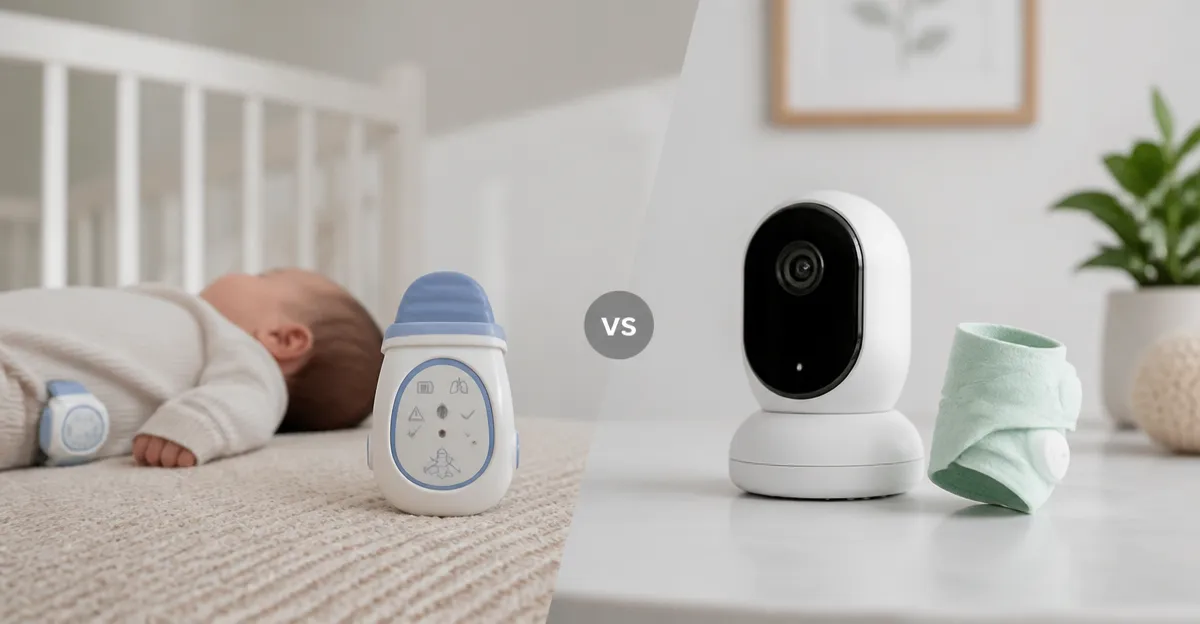
Parents increasingly rely on technology to obtain reassurance while their infants sleep. This article compares four distinct Amazon listings: the Snuza Hero Baby Movement Monitor and three Owlet Dream Sock variations, as well as the Owlet Dream Duo 3 system. The comparison focuses on price, feature set, customer sentiment, reliability, size, power and compatibility. Understanding these dimensions enables one to select a monitor that aligns with space constraints, power availability, ecosystem compatibility or budget limits.
Individual Product Overviews
Snuza Hero Baby Movement Monitor
Price: $119.95 Rating: 4.5/5 (592 reviews) Availability: In Stock
- Patented direct‑touch sensors attach to the diaper, providing ultra‑sensitive movement detection.
- Two‑stage alarm: vibration after 15 seconds of no movement, audible alert after an additional 5 seconds.
- Visual green indicator and optional ticking sound for added reassurance.
- Battery life up to six months, replaceable, with no Wi‑Fi or cords required.
- Medical‑grade plastic and silicone ensure safety for sensitive skin.
Positive sentiment highlights include a reviewer who stated, “It is loud enough that we can hear it across the hall with both doors open,” and another who praised the six‑month battery life for travel use. A minor gripe concerns the side‑button layout, which some users find awkward.
Owlet Dream Duo 3
Price: $379.99 Rating: 4.4/5 (189 reviews) Availability: In Stock
- Combines the FDA‑cleared Dream Sock (pulse oximetry) with a 2K HD camera (130° lens, 4× zoom). li>Real‑time alerts for heart rate and oxygen levels; predictive sleep technology for routine optimization.
- 256‑bit encryption and SGS Cybersecurity Mark protect video and health data.
- Bluetooth and dual‑band Wi‑Fi pairing; the camera supports 2.4 GHz and 5 GHz, the sock requires 2.4 GHz.
- Up to 18 months of health monitoring; camera usable for toddlers.
Customers appreciate the peace of mind and “rare false readings,” yet several negative reviews cite frequent Wi‑Fi disconnections, lag, and a short return window.
Owlet Dream Sock
Price: $299.00 Rating: 4/5 (5,284 reviews) Availability: In Stock
- Spandex‑nylon sock tracks pulse and oxygen with medical‑grade sensors.
- Base station delivers audible alerts and visual color codes (yellow, blue, lavender, red).
- Predictive Sleep Technology shows sleep trends and optimal wake windows.
- 16‑hour battery, Bluetooth + 2.4 GHz Wi‑Fi connection.
- 256‑bit encryption safeguards data.
Positive reviewers often mention “peace of mind” and “better sleep,” while negative reviewers criticize the mandatory app connection and occasional Bluetooth dropouts.
Additional Owlet Dream Sock Listings
The Amazon catalog contains two further listings for the same Dream Sock model (ASIN B09QY2H8SG and B09YVSYGDW). Both share identical specifications, pricing and customer sentiment as the previous entry, and therefore are treated as equivalent alternatives for shoppers who encounter different sellers.
Head‑to‑Head Comparison
Price and Value
- Snuza Hero offers the lowest entry price at $119.95, representing a cost‑effective solution for movement‑only monitoring.
- Owlet Dream Sock sits at $299.00, providing health metrics in addition to movement detection; the price reflects the medical‑grade sensor suite.
- Owlet Dream Duo 3 commands the highest price at $379.99, bundling a high‑resolution camera with the sock, thereby delivering visual monitoring alongside health data.
Features and Specifications
| Snuza Hero | Owlet Dream Duo 3 | Owlet Dream Sock |
|---|---|---|
| Movement detection only (direct‑touch sensor) | Movement + pulse oximetry + 2K HD video | Pulse oximetry + movement (sock sensor) |
| Battery: replaceable, up to 6 months | Battery: 16 hours (sock), camera powered via outlet | Battery: 16 hours (sock) |
| No Wi‑Fi, no app | Bluetooth + dual‑band Wi‑Fi (camera), 2.4 GHz for sock | Bluetooth + 2.4 GHz Wi‑Fi |
| Visual green light + optional ticking sound | 2K video, 130° lens, 4× zoom, color‑coded alerts | Color‑coded base‑station alerts (yellow, blue, lavender, red) |
| Portable case for travel | Base station and camera require power outlet | Base station requires outlet |
Customer Ratings and Feedback
- Snuza Hero holds a 4.5‑star rating with reviewers praising its simplicity and long battery life; occasional complaints focus on button ergonomics.
- Owlet Dream Sock maintains a 4‑star rating; the large review volume (over 5,000) reflects broad adoption, with praise for accuracy and criticism for Bluetooth connectivity.
- Owlet Dream Duo 3 carries a 4.4‑star rating; users love the combined video‑health solution but report Wi‑Fi instability and higher price.
Performance and Reliability
Movement‑only devices such as Snuza Hero are less prone to software‑related failures because they operate without Wi‑Fi. Reviewers note reliable alerts, though false positives can occur when the sensor loses contact with the baby’s belly. The Dream Sock’s medical‑grade sensors deliver accurate pulse and oxygen data for the majority of users; however, Bluetooth dropouts have been reported after several months of use. The Dream Duo 3 adds a camera that delivers crisp visual monitoring, yet its reliance on a stable internet connection introduces latency and occasional disconnections, as documented in multiple negative reviews.
Size, Power, Compatibility
- Snuza Hero measures roughly 2 × 2 inches, weighs under 30 g, and fits easily on a diaper or clothing without adding bulk.
- Owlet Dream Sock is a fabric sock that covers a baby’s foot; the base station occupies a bedside footprint similar to a small alarm clock.
- Owlet Dream Duo 3 adds a camera roughly the size of a small security dome, requiring placement on a shelf or nightstand and a constant power source.
- All Owlet products are compatible only within the United States and rely on 2.4 GHz Wi‑Fi; the Duo’s camera also supports 5 GHz.
Pros & Cons
Snuza Hero
- Pros: Low price, six‑month battery, no Wi‑Fi, portable, simple two‑button operation.
- Cons: Detects movement only, no health metrics, button layout may be unintuitive, occasional false alerts when sensor loses contact.
Owlet Dream Sock
- Pros: Real‑time pulse and oxygen monitoring, extensive app analytics, color‑coded alerts, 94 % of users report better sleep.
- Cons: Requires Bluetooth and 2.4 GHz Wi‑Fi, battery lasts only 16 hours, occasional connectivity glitches, higher price.
Owlet Dream Duo 3
- Pros: Combines health monitoring with 2K video, predictive sleep technology, robust data encryption, multi‑camera expansion possible.
- Cons: Highest price, dependence on stable internet, reported Wi‑Fi lag, camera only works with one sock at a time.
Recommendations
For families constrained by limited space and seeking a battery‑powered, travel‑ready solution, the Snuza Hero is the optimal choice. Its compact form factor and six‑month battery eliminate the need for power outlets and routers.
For parents who prioritize health data and are comfortable managing a bedside base station, the Owlet Dream Sock provides the best balance of cost and clinical insight.
For households that desire comprehensive visual monitoring alongside health metrics and have reliable high‑speed Wi‑Fi, the Owlet Dream Duo 3 justifies its premium price.
FAQ
- What age range does each monitor support?
- Snuza Hero is intended for healthy infants; it does not specify an upper age limit but is designed for newborns to several months. Owlet Dream Sock and Dream Duo support infants from 1 month up to 18 months (6–30 lb).
- Do any of the devices require a Wi‑Fi connection?
- Only the Owlet Dream Sock and Dream Duo rely on Wi‑Fi (2.4 GHz). Snuza Hero operates completely offline.
- How long does the battery last?
- Snuza Hero offers up to six months on a replaceable battery. The Owlet sock provides roughly 16 hours per charge; the Dream Duo camera requires continuous power.
- Is the data transmitted securely?
- Both Owlet products employ 256‑bit encryption; the Dream Duo additionally holds the SGS Cybersecurity Mark. Snuza Hero does not transmit data, so security concerns are minimal.
- Can the Dream Sock be used with multiple cameras?
- According to user feedback, a single Dream Sock can pair with only one camera at a time, limiting multi‑camera setups.
- What happens if the sensor loses contact with the baby?
- Snuza Hero vibrates after 15 seconds and sounds an alarm after 20 seconds of no movement. Owlet devices emit a color‑coded alert (yellow) and an audible tone to indicate loss of contact.
- Are there any known issues with false alarms?
- All three systems report occasional false alerts. Snuza Hero may trigger if the sensor shifts; Owlet Dream Sock users note rare false oxygen spikes; Dream Duo users experience occasional Wi‑Fi‑related false notifications.
Conclusion
When evaluating baby monitoring solutions, the decision hinges on the balance between simplicity, health insight and visual coverage. The Snuza Hero excels in affordability, portability and battery longevity, making it ideal for families who require a movement‑only monitor without the complexity of a networked device. The Owlet Dream Sock delivers clinically relevant pulse‑oximetry and a rich data ecosystem at a mid‑range price, suitable for parents who value health metrics and are comfortable with a bedside base station. The Owlet Dream Duo 3 offers the most feature‑rich experience, integrating 2K video, health monitoring and predictive sleep analytics, but it demands a robust Wi‑Fi environment and a larger budget. By aligning the chosen monitor with specific constraints—space, power availability, compatibility or budget—parents can secure the peace of mind that modern technology promises.
Products Mentioned in This Review
Frequently Asked Questions
What is the main difference between the Snuza Hero and Owlet Dream Sock monitors?
Snuza Hero attaches a direct‑touch sensor to the diaper for movement detection, whereas Owlet Dream Sock is a wearable sock that monitors pulse and oxygen levels.
How does the two‑stage alarm system in the Snuza Hero work?
It vibrates after 15 seconds of no movement and sounds an audible alert if inactivity continues for another 5 seconds.
Which monitor is more budget‑friendly?
The Snuza Hero, priced around $119.95, is typically cheaper than the Owlet Dream Sock and Dream Duo 3 models.
Can the Owlet Dream Duo 3 integrate with smart home ecosystems?
Yes, it works with Apple HomeKit, Google Assistant, and Amazon Alexa for voice and app control.
What power options do the Snuza Hero and Owlet devices use?
Snuza Hero uses a replaceable coin‑cell battery, while Owlet monitors rely on rechargeable batteries or optional AC adapters.