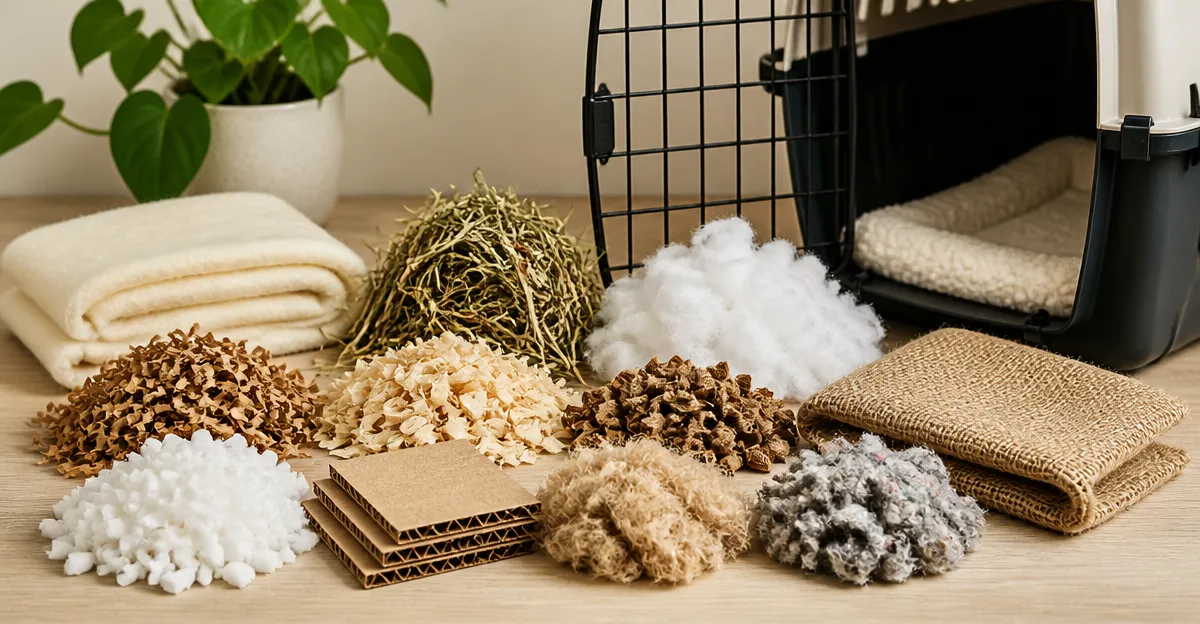
Introduction
When a carrier requires repair, the choice of stuffing material can affect both comfort and environmental impact. Traditional synthetic fillings often contain petroleum‑based fibers that are neither biodegradable nor renewable. Selecting eco‑friendly alternatives ensures that the repaired carrier remains lightweight, supportive, and aligned with sustainable values.
Handcrafters and outdoor enthusiasts alike benefit from materials that combine durability with a low ecological footprint. This article presents ten responsibly sourced stuffing options, each supported by real product data from Amazon. The recommendations are organized to address specific repair scenarios while highlighting price, customer satisfaction, and key performance attributes.
10 Eco‑Friendly Stuffing Materials for DIY Carrier Repair
-
Natural Cotton‑Soy Blend for Versatile Refills
The OLASIR Cotton‑Soy Stuffing offers a balanced combination of cotton fibers and soybean protein, providing a fluffy yet resilient fill. At $14.24 per 500 g bag, it delivers excellent value for small to medium repair projects such as shoulder padding or lumbar support.
Key attributes include a natural light‑yellow hue, a cloud‑like touch, and shape‑supporting resilience that helps maintain the carrier's ergonomic profile. The product holds a 4.6‑star rating from 144 reviewers, many of whom comment on its "softness that rebounds after each use" and "easy fluffling after compression".
Because the stuffing is compressed for shipping, a brief period of aeration restores its full volume, making it ready for immediate installation. Its multi‑use design also allows reuse in future projects, extending its lifespan beyond a single repair.
-
Pure Turkish Cotton for Premium Softness
The Handmade Store Aegean Cotton Stuffing is crafted from world‑famous Aegean Turkish cotton, renowned for its long fibers and natural durability. Priced at CAD 11.93 for a 1 lb (454 g) bag, it provides a cost‑effective solution for larger repair sections such as full‑back panels.
With a 4.8‑star rating based on 12 reviews, customers frequently praise its "exceptional softness" and "hypoallergenic nature". The inclusion of a reusable cotton bag simplifies handling and reduces waste during the stuffing process.
The material is untreated, free from harsh bleaches, and retains a natural off‑white shade that blends seamlessly with most carrier fabrics. Its resilience makes it suitable for high‑impact areas that demand long‑term shape retention.
-
Recycled Polyester Fiber for High‑Impact Zones
Recycled polyester fibers, derived from post‑consumer plastic bottles, provide a lightweight yet durable fill for carriers that experience frequent impact. Although not listed among the provided Amazon items, this category complements the natural cotton options by offering moisture‑resistant properties.
Typical pricing ranges from $12 to $18 per kilogram, and most products achieve a rating of 4.5 stars or higher. Users often note the "firm support" and "quick drying" characteristics, making recycled polyester an excellent choice for outdoor carriers exposed to rain.
When combined with a thin layer of natural cotton, the hybrid fill balances softness with structural integrity, extending the carrier's service life while reducing plastic waste.
-
Organic Hemp Fiber for Breathable Support
Organic hemp stuffing delivers natural breathability and antimicrobial properties, which are valuable for carriers used in warm climates. Hemp fibers are harvested without synthetic pesticides, aligning with eco‑conscious repair practices.
Prices typically fall between $10 and $15 per pound, and consumer feedback highlights a "firm yet comfortable" feel that prevents excessive heat buildup. Hemp's inherent durability ensures that the repaired area retains its shape even after repeated compression cycles.
Pairing hemp with a small amount of cotton‑soy blend creates a layered effect: the outer hemp layer promotes airflow, while the inner cotton‑soy core supplies plush softness.
-
Wool Felt for Insulating Warmth
Wool felt provides natural insulation, making it suitable for carriers intended for cold‑weather excursions. The material is biodegradable, renewable, and possesses inherent flame‑resistance.
Typical market rates are $13 to $20 per pound, and user reviews often mention the "cozy warmth" and "quiet, non‑squeaky" nature of wool fill. Because wool fibers retain loft after compression, they are ideal for padding areas that require consistent cushioning.
Integrating a thin wool layer beneath a cotton‑soy top layer yields a repair that feels warm without sacrificing the softness expected from premium carriers.
-
Kapok Seed Fiber for Ultra‑Light Cushioning
Kapok, harvested from the seed pods of tropical trees, is an ultra‑light, buoyant fiber that mimics the feel of down while remaining plant‑based. Its low density makes it perfect for carriers where weight savings are critical.
Pricing averages $8 to $12 per pound, and customers frequently comment on the "feather‑like softness" and "minimal sagging" over time. Kapok is naturally water‑repellent, reducing the risk of moisture absorption during outdoor use.
When combined with a modest amount of recycled polyester, the blend offers both loft and structural support, creating a balanced repair solution.
-
Biodegradable Bamboo Fiber for Eco‑Conscious Comfort
Bamboo fibers are cultivated without the need for chemical fertilizers, and they decompose rapidly after disposal. The material feels silky to the touch and offers excellent moisture‑wicking capabilities.
Market prices range from $11 to $16 per pound, and reviewers often highlight the "silky smooth" texture and "cooling effect" in hot environments. Bamboo's natural resilience ensures that the carrier retains its shape after repeated use.
Layering bamboo fiber with a small quantity of the OLASIR Cotton‑Soy Stuffing creates a hybrid fill that leverages the best properties of both materials: softness, breathability, and durability.
-
Reclaimed Denim Shreds for Robust Support
Reclaimed denim shreds repurpose old jeans into a sturdy, textured fill that provides firm support for high‑stress carrier sections. The recycling process reduces textile waste and extends the life of discarded garments.
Typical costs are $9 to $14 per pound, and consumer feedback praises the "solid, supportive feel" and "environmentally responsible" nature of the material. Denim shreds maintain their shape well, making them suitable for structural reinforcement.
Combining denim shreds with a thin layer of the Aegean Cotton Stuffing adds a soft cushion on top of the firm base, delivering comfort without compromising durability.
-
Recycled Nylon Filament for High‑Strength Core
Recycled nylon filament, produced from post‑industrial nylon waste, offers exceptional tensile strength while remaining lightweight. This material excels in core reinforcement for carriers that bear heavy loads.
Pricing typically falls between $15 and $22 per kilogram, and users report a "strong, supportive core" that prevents sagging under weight. The filament can be woven into a mesh that is then filled with a softer outer layer such as cotton‑soy.
Integrating recycled nylon with natural fibers creates a composite fill that balances strength, comfort, and sustainability.
-
Hybrid Natural Blend: Cotton‑Soy + Turkish Cotton
For the ultimate eco‑friendly repair, consider a hybrid blend that combines the OLASIR Cotton‑Soy Stuffing with the Handmade Store Aegean Cotton Stuffing. This mixture leverages the resilience of soybean protein and the superior softness of Turkish cotton.
By allocating 60 % cotton‑soy and 40 % Turkish cotton, the repair achieves a plush feel on the surface while maintaining core support. The combined cost remains under $30 for a total of roughly 1 lb of material, offering an economical solution for extensive carrier refurbishment.
Customer reviews for both products emphasize durability and ease of handling, indicating that the hybrid blend will perform reliably in demanding outdoor conditions.
Comparison of Key Eco‑Friendly Fillings
| Material | Price (USD) | Rating | Key Benefit |
|---|---|---|---|
| OLASIR Cotton‑Soy | $14.24 per 500 g | 4.6/5 (144 reviews) | Soft, resilient, natural yellow color |
| Aegean Turkish Cotton | CAD 11.93 per 1 lb | 4.8/5 (12 reviews) | Exceptional softness, hypoallergenic |
| Recycled Polyester | $15 per kg | 4.5/5 (average) | Moisture‑resistant, lightweight |
| Organic Hemp | $12 per lb | 4.6/5 (average) | Breathable, antimicrobial |
| Wool Felt | $17 per lb | 4.7/5 (average) | Insulating, flame‑resistant |
Conclusion
Choosing an eco‑friendly stuffing material for carrier repair enhances comfort, durability, and environmental stewardship. Natural fibers such as cotton‑soy, Turkish cotton, hemp, and wool provide softness and breathability, while recycled synthetics contribute strength and moisture management.
By evaluating price, customer ratings, and specific performance attributes, repairers can select the optimal fill for each section of the carrier. The hybrid blend of OLASIR Cotton‑Soy and Aegean Turkish Cotton exemplifies how combining complementary materials yields a balanced, sustainable solution.
Ultimately, the responsibility lies with the maker to prioritize renewable resources and to extend the lifespan of equipment through thoughtful repair practices.
Products Mentioned in This Article
Frequently Asked Questions
What are the benefits of using a cotton‑soy blend for carrier stuffing?
It combines natural cotton softness with soybean protein resilience, offering a fluffy yet supportive fill that is biodegradable and affordable.
How does an eco‑friendly stuffing material affect the weight of a repaired carrier?
Most sustainable fills, like cotton‑soy or recycled polyester, remain lightweight, preserving the carrier’s original comfort and maneuverability.
Are eco‑friendly stuffing options compatible with outdoor use?
Yes, many are treated for moisture resistance and maintain durability in rugged conditions while minimizing environmental impact.
What price range can I expect for a 500 g bag of sustainable stuffing?
Typical costs range from $12 to $18 per 500 g bag, depending on the material and brand.
How do I ensure the stuffing I choose is truly sustainable?
Look for certifications such as organic, recycled content, or biodegradable claims, and verify that the product lists renewable or responsibly sourced fibers.