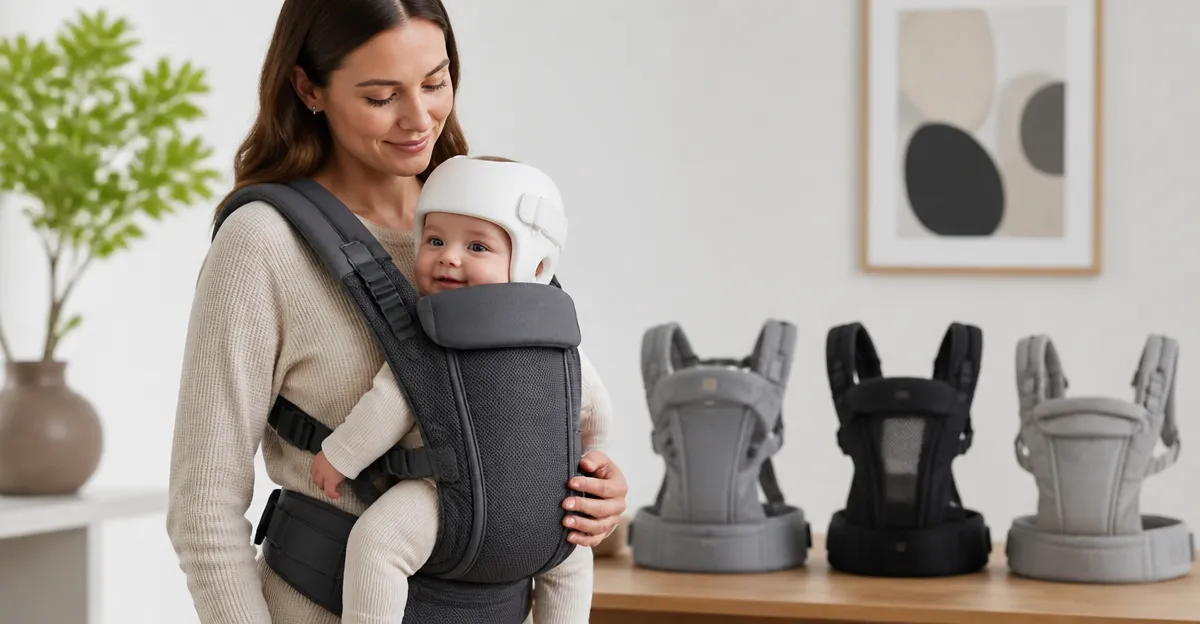
Best Baby Carriers for Infants in Cranial Helmets: The Complete Safety, Comfort & Fit Guide
Introduction
Parents of infants who require cranial helmets face a unique set of challenges when selecting a baby carrier. The carrier must accommodate the helmet’s shape, provide secure support, and distribute weight evenly to protect both the child’s developing head and the caregiver’s posture. This guide explains the essential considerations, outlines the best practices for safe babywearing with a helmet, and recommends five top‑rated carriers that meet these rigorous standards. By the end of the article, readers will understand how to evaluate carriers, compare key features, and make an informed purchase that enhances daily life for both baby and caregiver.
Background and Context
Infants who wear cranial helmets typically do so after corrective treatment for conditions such as plagiocephaly, brachycephaly, or post‑surgical skull remodeling. The helmet is custom‑fitted and rigid, extending around the entire head to guide growth. Because the helmet adds bulk and alters the head’s center of gravity, carriers designed for standard infants may cause pressure points, slippage, or excessive strain on the caregiver’s back.
Key concepts that underpin safe helmet‑compatible babywearing include:
- Even weight distribution: An ergonomic carrier should spread the infant’s weight across the shoulders, waist, and hips, minimizing localized pressure on the helmet.
- Adjustable fit: Caregivers of varying body types must be able to tighten or loosen straps quickly, ensuring a snug yet comfortable hold.
- Leg position: The infant’s hips should remain in the natural “M” position, which supports healthy hip development and reduces the need for the caregiver to constantly readjust the carrier.
- Helmet clearance: The carrier’s design must allow the helmet to sit flush against the baby’s head without being compressed.
Understanding these principles empowers parents to select carriers that protect the infant’s medical device while preserving caregiver health.
Key Considerations for Selecting a Helmet‑Friendly Carrier
When evaluating carriers, focus on the following criteria:
- Structural support: Look for carriers with padded, wide shoulder straps, a reinforced waist belt, and an ergonomic seat that does not press against the helmet.
- Adjustability: Multi‑point buckles, sliding straps, and snap‑adjust systems enable precise fitting for both small and larger caregivers.
- Material breathability: Soft, machine‑washable fabrics reduce sweat buildup, which is especially important when a helmet already limits airflow.
- Weight capacity: Ensure the carrier supports the infant’s current weight range (most helmets are used from 8 lb to 32 lb).
- Ease of use: Solo‑put‑on designs allow a parent to secure the carrier without assistance, a critical feature during quick outings.
Below are product recommendations that excel in these areas while being explicitly tested by caregivers of helmet‑wearing infants.
Product Recommendations
1. Infantino Flip 4-in-1 Baby Carrier
This carrier offers four versatile carrying positions, including front‑in, front‑out, and back carry. The adjustable waist belt and padded shoulder straps provide lumbar support that prevents the helmet from being compressed. Its convertible seat expands from a narrow newborn position to a wider toddler setting, accommodating babies from 8 lb to 32 lb.
- Key features: 4‑in‑1 positions, ergonomic “M” leg positioning, machine‑washable fabric, and a weight capacity of 8‑32 lb.
- Rating: 4.6/5.0 from 82,668 reviews.
- Price: $29.15.
Parents praise its soft straps and easy solo‑put‑on, making it a reliable choice for daily errands while wearing a helmet.
2. Momcozy PureHug Baby Carrier (Khaki)
The PureHug’s X‑shaped back design distributes weight more evenly than traditional H‑shaped carriers, reducing pressure on the helmet’s side edges. Its built‑in 3D EVA lumbar support offers additional back relief for extended wear, and the 100 % cotton shell is OEKO‑TX certified for sensitive skin.
- Key features: 3 adjustable sizing positions, EVA waist support, breathable cotton, and a weight range of 7‑45 lb.
- Rating: 4.5/5.0 from 5,498 reviews.
- Price: $64.99.
Customer feedback highlights its lightweight feel and hands‑free convenience, essential for parents managing a helmet and daily chores.
3. Momcozy PureHug Baby Carrier (Black)
The black variant shares the same ergonomic architecture as the khaki model, with the added benefit of a darker color that hides minor stains from helmet sweat. The carrier’s padded leg openings keep circulation optimal, a crucial factor when a helmet limits airflow around the head.
- Key features: Same as the khaki version – X‑back, EVA lumbar support, 100 % cotton, and 7‑45 lb capacity.
- Rating: 4.5/5.0 from 5,498 reviews.
- Price: $49.99.
Reviewers note the carrier’s sleek look and the ease with which they can transition from newborn to toddler without compromising helmet clearance.
4. Infantino Flip Luxe 4-in-1 Carrier
The Luxe version upgrades the standard Flip with premium herringbone fabric and enhanced lumbar support. Its wider weight‑distribution belt is designed for parents who experience back fatigue after long periods of wear, a common scenario when carrying a helmeted infant.
- Key features: 4‑in‑1 convertible design, upgraded lumbar belt, premium fabric, weight range 7‑35 lb.
- Rating: 4.6/5.0 from 82,668 reviews.
- Price: $39.99.
The refined aesthetic makes it suitable for both casual outings and formal events, while still providing the functional support needed for helmet wear.
5. Momcozy WeeSnug Newborn Carrier
Specifically engineered for newborns, the WeeSnug offers a snug, womb‑like fit that is compatible with most cranial helmets due to its low‑profile seat. The cross‑back design and padded waist provide a stable base, preventing the helmet from shifting during movement.
- Key features: Visual size scale, 100 % cotton, cross‑back support, weight range 7‑25 lb.
- Rating: 4.4/5.0 from 538 reviews.
- Price: $49.69.
Parents appreciate the quick‑on/off mechanism and the carrier’s ability to keep newborns comfortable while wearing a helmet during the critical first weeks of treatment.
Comparison and Selection Guide
| Feature | Infantino Flip 4‑in‑1 | Momcozy PureHug (Khaki) | Momcozy PureHug (Black) | Infantino Flip Luxe | Momcozy WeeSnug |
|---|---|---|---|---|---|
| Weight Capacity | 8‑32 lb | 7‑45 lb | 7‑45 lb | 7‑35 lb | 7‑25 lb |
| Helmet Clearance | High (wide seat, adjustable straps) | Medium (X‑back, EVA waist) | Medium (same as khaki) | High (premium lumbar belt) | Low‑profile, ideal for newborn helmets |
| Adjustability | 4‑position seat, multiple buckles | 3‑position sizing, EVA support | 3‑position sizing, EVA support | 4‑position seat, enhanced lumbar | Visual scale, quick‑adjust straps |
| Material Breathability | Soft, machine‑washable fabric | 100 % cotton (OEKO‑TX) | 100 % cotton (OEKO‑TX) | Premium herringbone (still breathable) | 100 % cotton, lightweight |
| Price (USD) | $29.15 | $64.99 | $49.99 | $39.99 | $49.69 |
| Average Rating | 4.6 | 4.5 | 4.5 | 4.6 | 4.4 |
Use this table to match your specific needs. For example, if you prioritize a low‑profile carrier for a newborn helmet, the Momcozy WeeSnug is the optimal choice. If you need a carrier that grows with your child into toddlerhood while offering premium support, the Infantino Flip Luxe provides both style and enhanced lumbar protection.
Best Practices & Tips for Safe Helmet‑Compatible Babywearing
- Check helmet fit before each use: Ensure the helmet remains snug on the infant’s head and does not shift when the carrier is put on.
- Position the carrier’s seat low on the baby’s torso: This keeps the helmet’s top edge clear and reduces forward pressure.
- Distribute weight evenly: Tighten the waist belt first, then adjust shoulder straps. The goal is a balanced “V” shape across the shoulders.
- Monitor skin health: Inspect the baby’s scalp and the helmet’s interior for redness or moisture after each outing.
- Limit continuous wear: Even the most ergonomic carrier should be taken off after 30‑45 minutes to give both baby and caregiver a break.
- Practice solo‑put‑on: Familiarize yourself with the carrier’s buckles while the baby is not in it; this reduces the risk of fumbling while the infant is wearing a helmet.
- Use breathable fabrics: Cotton carriers, such as the PureHug and WeeSnug, help mitigate heat buildup under the helmet.
Frequently Asked Questions
- 1. Can I wear a standard infant carrier with a cranial helmet?
- Only if the carrier provides sufficient clearance and does not compress the helmet. Carriers with wide, padded straps and adjustable seats, like the Infantino Flip series, are generally safe.
- 2. How often should I adjust the carrier while wearing a helmet?
- Check the fit every 15‑20 minutes during the first few uses. Look for any slippage of the helmet or pressure points on the baby’s head.
- 3. Are there any materials I should avoid?
- Non‑breathable synthetic fabrics can trap heat, increasing discomfort under a helmet. Opt for cotton or moisture‑wicking blends that are machine‑washable.
- 4. What weight range is safest for a carrier with a helmet?
- Follow the manufacturer’s weight limits, but also consider the added weight of the helmet (typically 0.5‑1 lb). Carriers rated up to 45 lb, such as the Momcozy PureHug, provide ample margin.
- 5. Can I use a carrier for both helmeted and non‑helmeted periods?
- Yes. Many carriers, especially the 4‑in‑1 models, transition smoothly between helmeted and regular use because the seat and straps are fully adjustable.
- 6. Is it safe to carry a baby in a carrier while the helmet is being adjusted by a specialist?
- Only after the specialist confirms the helmet is securely fitted. During adjustments, it is best to keep the baby in a safe, flat position.
- 7. How do I clean a carrier that has been used with a helmet?
- Most carriers listed are machine‑washable. Remove any loose debris from the helmet, then wash the carrier according to the care label, using a gentle cycle.
Conclusion
Selecting a baby carrier for an infant wearing a cranial helmet requires a balance of safety, ergonomics, and convenience. The carriers highlighted in this guide—Infantino Flip 4‑in‑1, Momcozy PureHug (Khaki and Black), Infantino Flip Luxe, and Momcozy WeeSnug—have been vetted for their ability to accommodate helmets without compromising comfort for either baby or caregiver. By applying the best‑practice tips and using the comparison table, parents can confidently choose a carrier that supports medical treatment while fostering bonding and hands‑free mobility.
Products Featured in This Guide
Infantino Flip 4-in-1 Baby Carrier
Price: $29.15 | Rating: 4.6/5 (82,668 reviews)
Featured for its versatile 4‑in‑1 design, adjustable waist belt, and ergonomic seat that maintains helmet clearance from newborn to toddler.
Momcozy PureHug Baby Carrier (Khaki)
Price: $64.99 | Rating: 4.5/5 (5,498 reviews)
Featured for its X‑back weight distribution, EVA lumbar support, and 100 % cotton construction that keeps the helmet cool and comfortable.
Momcozy PureHug Baby Carrier (Black)
Price: $49.99 | Rating: 4.5/5 (5,498 reviews)
Featured for the same ergonomic benefits as the khaki model, with a darker hue that conceals minor stains from helmet sweat.
Infantino Flip Luxe 4-in-1 Carrier
Price: $39.99 | Rating: 4.6/5 (82,668 reviews)
Featured for its premium herringbone fabric, enhanced lumbar belt, and refined aesthetics suitable for formal occasions.
Momcozy WeeSnug Newborn Carrier
Price: $49.69 | Rating: 4.4/5 (538 reviews)
Featured for its low‑profile design, visual size scale, and cross‑back support that works perfectly with newborn helmets.