Introduction
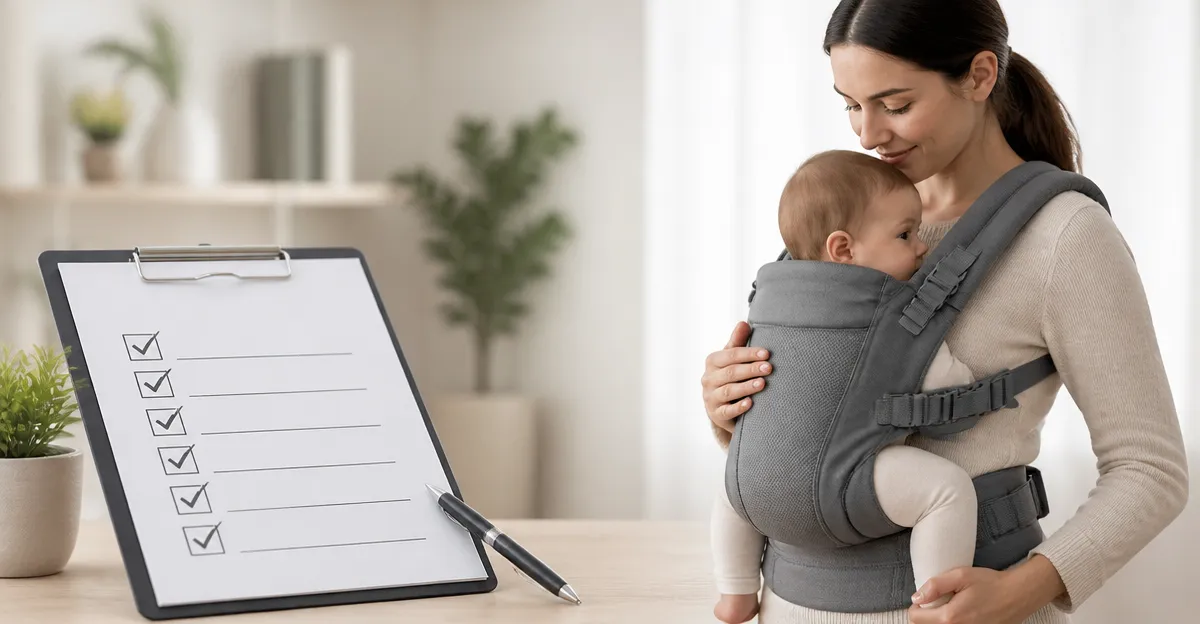
This guide presents a systematic checklist that a physical therapist can employ when evaluating baby carriers for ergonomic safety. Readers will learn the anatomical principles that underpin healthy hip and spine development in infants, as well as the mechanical factors that influence caregiver comfort. The article integrates evidence‑based criteria with concrete product examples, allowing one to distinguish between merely functional carriers and those that truly support musculoskeletal health. By the end of the guide, one will be equipped to make informed recommendations that align with best clinical practice.
Background and Context
Infant hip dysplasia and spinal strain are documented concerns when carriers do not maintain the natural "M" position of the legs. The "M" position describes flexed hips with knees higher than the buttocks, a posture that encourages proper acetabular development. In addition, the caregiver’s lumbar spine benefits from weight distribution that avoids excessive anterior loading. Understanding these biomechanical concepts is essential for any practitioner who advises families on babywearing solutions.
Physical therapists routinely assess posture, range of motion, and load‑bearing capacity in both infants and adults. Translating these assessment skills to the selection of a carrier requires a clear set of observable criteria. The checklist below aligns each criterion with observable features that can be verified during a brief hands‑on demonstration.
Key Ergonomic Concepts
1. Hip and Spine Alignment
One should verify that the carrier promotes a wide‑angle thigh spread, with the infant’s knees positioned higher than the hips. This arrangement mimics the fetal position and reduces the risk of femoral head subluxation. Carriers that incorporate padded leg openings and adjustable crotch straps are more likely to achieve this alignment. The NEST BLANCHE Ergonomic Baby Carrier explicitly advertises a 4‑in‑1 design that supports the "M" position for babies weighing 7‑35 lb.
2. Weight Distribution and Back Support
An X‑shaped back panel or a structured waist belt can transfer the infant’s mass from the shoulders to the hips, thereby decreasing lumbar flexion. Padded shoulder straps alone are insufficient if the carrier lacks a central support system. The Infantino Flip 4‑in‑1 Baby Carrier features a wide waist belt and an X‑shaped back design that evenly distributes load across the caregiver’s torso.
3. Material Breathability and Skin Safety
Soft, breathable fabrics reduce heat retention and minimize the risk of skin irritation on delicate infant epidermis. Moisture‑wicking properties are especially important during prolonged wear in warm climates. GROWNSY Newborn‑to‑Toddler Carrier utilizes a breathable, skin‑friendly textile that feels like a mother’s embrace while allowing air circulation.
4. Adjustability and Fit for Diverse Caregivers
Carriers must accommodate a range of body types, including postpartum changes and plus‑size caregivers. Adjustable shoulder straps, waist belts, and crotch bands enable a personalized fit that maintains ergonomic integrity. All three featured carriers provide multiple adjustment points, but the NEST BLANCHE model highlights a fully adjustable system designed for postpartum and plus‑size users.
Comparison and Selection Guide
The table below summarizes how each carrier meets the checklist criteria, allowing one to match product attributes with client needs.
| Criterion | NEST BLANCHE | Infantino Flip | GROWNSY |
|---|---|---|---|
| Supports "M" hip position (7‑35 lb) | Yes – padded leg openings, 4‑in‑1 design | Yes – convertible seat with narrow/wide options | Yes – ergonomic "M" shape, 7‑44 lb range |
| Weight distribution system | X‑shaped back panel, padded straps | Wide waist belt, X‑shaped back | EVA waist support, X‑shaped back |
| Breathability | Cotton blend, breathable mesh | Soft, machine‑washable fabric | Soft, breathable fabric resembling a mother’s embrace |
| Adjustability for caregivers | Fully adjustable straps, plus‑size friendly | Custom‑fit straps, buckles for all caregivers | Adjustable waist and shoulder straps |
| Price (USD) | $89.99 | CAD41.60 (~$30 USD) | $39.97 |
| Average rating | 4.7/5 (590 reviews) | 4.6/5 (82,574 reviews) | 4.6/5 (586 reviews) |
Best Practices and Practical Tips
- Conduct a visual inspection of the carrier while the infant is positioned in the "M" posture; ensure that the thighs form a gentle angle greater than 90 degrees.
- Ask the caregiver to walk a short distance; observe for any excessive forward lean or shoulder elevation, which may indicate inadequate weight transfer.
- Verify that all buckles and Velcro closures are secure before each use; a loose strap can compromise both infant safety and caregiver ergonomics.
- Encourage caregivers to alternate sides when using a single‑shoulder configuration to prevent asymmetrical loading of the spine.
- Recommend periodic breaks of 15‑20 minutes during prolonged wear to allow circulation and reduce muscle fatigue.
Frequently Asked Questions
- 1. At what age can a baby transition from a newborn seat to a wider ergonomic seat?
- Most carriers allow the transition when the infant can support the head independently, typically around three to four months, provided the weight remains within the specified range.
- 2. How can one confirm that the carrier maintains proper spinal alignment?
- One should observe that the infant’s back remains in a neutral, slightly arched position without excessive rounding; the carrier’s support panels should cradle the lumbar region without forcing the shoulders forward.
- 3. Are there specific fabrics that reduce the risk of allergic reactions?
- Natural fibers such as cotton and bamboo, which are hypoallergenic and breathable, are preferred. All three featured carriers employ soft, skin‑friendly textiles that have received positive feedback from users with sensitive skin.
- 4. What is the recommended maximum weight for ergonomic babywearing?
- Carriers that support the "M" position are generally rated for infants up to 35‑44 lb, depending on the model. Exceeding the manufacturer’s limit may compromise both hip development and caregiver comfort.
- 5. Can a single caregiver use the carrier for both front‑facing and back‑facing positions safely?
- Yes, provided the carrier’s instructions confirm that the back‑facing mode is appropriate for the infant’s weight and developmental stage. The Infantino Flip and GROWNSY models both include clear guidelines for front‑ and back‑facing configurations.
- 6. How often should the carrier be cleaned to maintain hygiene?
- Carriers with machine‑washable fabrics should be laundered after each week of regular use, or sooner if spills occur. Spot‑cleaning with mild detergent is acceptable for localized stains.
- 7. What signs indicate that a carrier is no longer ergonomically suitable?
- Signs include persistent shoulder or lower‑back pain in the caregiver, visible slouching of the infant, or difficulty securing the buckles without excessive force.
Conclusion
Physical therapists possess the expertise to evaluate baby carriers through the lens of hip and spine biomechanics, load distribution, and caregiver ergonomics. By applying the checklist outlined in this guide, one can differentiate between carriers that merely hold an infant and those that actively promote healthy musculoskeletal development. The comparative analysis demonstrates that the NEST BLANCHE, Infantino Flip, and GROWNSY carriers each satisfy core ergonomic criteria, yet they differ in price, weight capacity, and aesthetic options. Ultimately, the best choice aligns with the infant’s developmental stage, the caregiver’s body geometry, and the specific daily activities for which the carrier will be used.
Products Featured in This Guide
NEST BLANCHE Ergonomic Baby Carrier
Price: $89.99 | Rating: 4.7/5 (590 reviews)
Featured because it provides a fully adjustable 4‑in‑1 system that supports the infant "M" position, includes an X‑shaped back panel for optimal weight distribution, and accommodates plus‑size caregivers.
Infantino Flip 4-in-1 Baby Carrier
Price: CAD41.60 (~$30 USD) | Rating: 4.6/5 (82,574 reviews)
Featured because it offers four carrying positions, a wide waist belt, and an X‑shaped back design that together ensure balanced load transfer and ergonomic comfort for both infant and caregiver.
GROWNSY Newborn-to-Toddler Carrier
Price: $39.97 | Rating: 4.6/5 (586 reviews)
Featured because it combines a foldable head and neck support with breathable, skin‑friendly fabric, and an adjustable three‑point support system that promotes proper hip development across a wide weight range.