Introduction
This guide examines the intersection of babywearing and infant vestibular development, offering parents evidence‑based strategies to boost balance, motor skills, and sensory growth. Readers will discover why vestibular stimulation matters, how carrying infants can provide natural input, and which features to prioritize when selecting a carrier. The article balances scientific context with practical advice, ensuring that both novice and experienced caregivers can apply the recommendations immediately. By the end, one will feel confident in choosing and using a babywearing solution that supports healthy neurodevelopment.
Background and Context
The vestibular system, located within the inner ear, regulates balance, spatial orientation, and eye‑movement coordination. In the first year of life, this system matures rapidly, responding to movements such as rocking, swinging, and gentle rotations. Research indicates that consistent, moderate vestibular input can accelerate neural pathways associated with motor planning and sensory integration. Understanding these principles provides a foundation for leveraging babywearing as a developmental tool.
The Role of Vestibular Stimulation in Early Development
Infants experience vestibular cues primarily through caregiver‑initiated motions, such as being held, rocked, or carried. These cues stimulate hair cells that send signals to the brainstem, fostering myelination and synaptic refinement. When the vestibular system functions optimally, infants display smoother head control, earlier crawling, and improved coordination during reaching tasks. Moreover, balanced vestibular input supports emotional regulation, reducing fussiness and promoting calm states.
Clinical studies have linked regular vestibular exposure with enhanced postural control and earlier achievement of gross‑motor milestones. For example, infants who receive daily gentle rocking demonstrate more stable sitting posture by six months compared with those who receive minimal movement. Consequently, caregivers seeking to nurture these developmental domains can incorporate babywearing into daily routines.
How Babywearing Provides Natural Vestibular Input
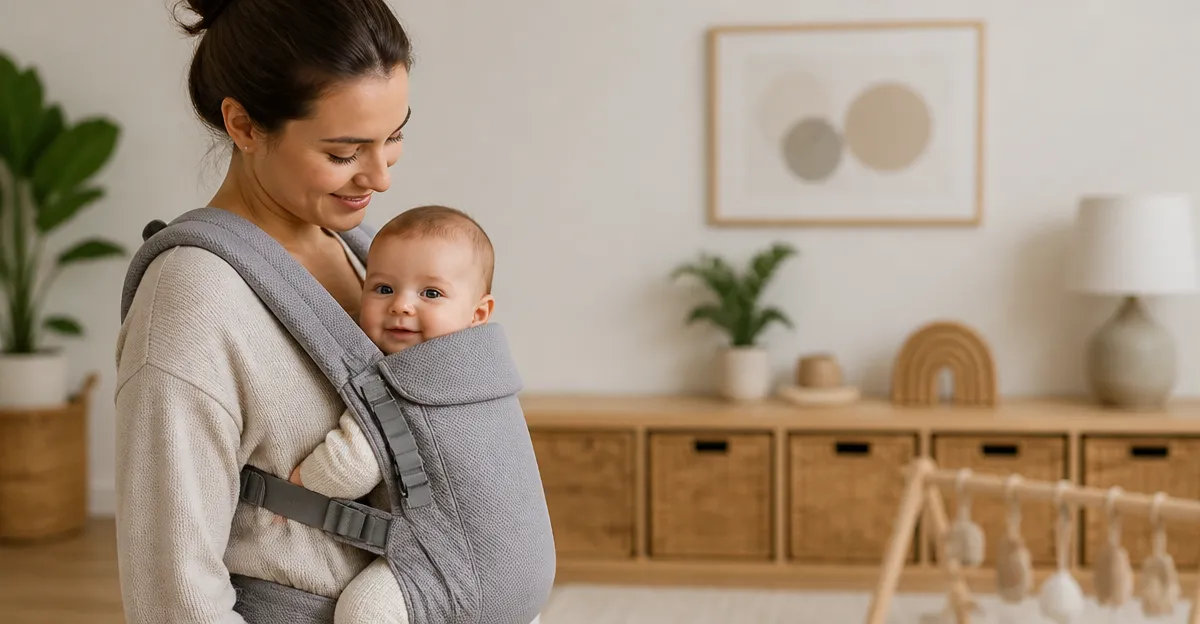
When a caregiver wears a baby close to the chest, the infant experiences subtle movements that mimic the womb’s environment. These micro‑motions—such as the sway of walking, the shift of turning, and the bounce of stairs—deliver continuous vestibular stimulation without overstimulation. The proximity also encourages skin‑to‑skin contact, which further supports autonomic regulation and bonding.
Babywearing promotes an upright posture that aligns the infant’s head and spine, allowing the vestibular apparatus to function in a gravity‑consistent manner. This alignment contrasts with supine positions, where the vestibular cues are limited. By integrating babywearing into everyday activities, parents can provide a rich sensory diet that complements tummy time and play.
Choosing a Babywearing Solution
Not all carriers deliver the same quality of vestibular support. Key attributes to consider include ergonomic design, weight distribution, and fabric breathability. A carrier that distributes weight evenly reduces caregiver strain while maintaining gentle, rhythmic motion for the infant.
One product that exemplifies these qualities is the Boba Original Baby Wrap Carrier. Its ultra‑soft bamboo fabric offers cooling comfort, and the design is certified “Hip‑Healthy” by the International Hip Dysplasia Institute, ensuring safe positioning. The wrap’s stretch accommodates bodies from petite to plus size, making it a versatile choice for diverse families.
Comparison and Selection Guide
When evaluating carriers, compare them across three core dimensions: ergonomics, material performance, and adaptability.
- Ergonomics: Look for carriers that provide hip‑healthy positioning, such as the “M‑position” recommended by pediatric specialists. The Boba Original Baby Wrap Carrier meets this standard and includes reinforced stitching for durability.
- Material Performance: Breathable, moisture‑wicking fabrics prevent overheating during prolonged wear. Bamboo blends, as used in the Boba wrap, excel in temperature regulation while remaining gentle on sensitive skin.
- Adaptability: Consider carriers that grow with the child, offering multiple wrapping techniques or adjustable straps. The Boba wrap’s generous stretch allows use from newborns (7 lb) up to toddlers (35 lb).
Parents should also assess cleaning ease, as frequent laundering is typical. The Boba wrap is machine‑washable, simplifying maintenance for busy households.
Best Practices & Tips
To maximize vestibular benefits, follow these evidence‑based practices:
- Begin wearing the infant as soon as the newborn is medically cleared, typically within the first few weeks.
- Maintain a secure, ergonomic hold; the infant’s hips should form a “M” shape with knees higher than the bottom.
- Incorporate varied movements—slow walking, gentle swaying, and occasional turns—to provide diverse vestibular cues.
- Limit continuous wear to 1–2 hours for newborns, gradually extending duration as neck and core strength increase.
- Combine babywearing with tummy time and floor play to ensure a balanced sensory experience.
Additionally, monitor the infant’s cues; signs of discomfort, excessive crying, or overheating indicate the need to adjust positioning or take a break.
Frequently Asked Questions
- 1. Is babywearing safe for newborns with medical conditions?
- Most infants can be carried safely if cleared by a pediatrician; however, conditions such as severe reflux may require modified positions.
- 2. How long should a baby be worn each day?
- Start with short sessions of 15‑30 minutes, increasing to 1‑2 hours as the infant tolerates the position.
- 3. Can babywearing replace tummy time?
- No. Tummy time promotes head‑lifting strength and visual tracking, which complement the vestibular input from carrying.
- 4. What if the caregiver experiences back pain?
- Choose an ergonomic carrier that distributes weight evenly, such as the Boba Original Baby Wrap Carrier, and ensure proper posture while walking.
- 5. Are there age limits for using a wrap carrier?
- The Boba wrap supports infants from 7 lb to 35 lb, covering newborn to early toddler stages.
Conclusion
Babywearing offers a natural, effective avenue for delivering vestibular stimulation that supports balance, motor development, and sensory regulation. By selecting an ergonomic, breathable carrier like the Boba Original Baby Wrap Carrier, caregivers can provide continuous, gentle motion while maintaining hip‑healthy positioning. Integrating babywearing with other developmental activities creates a holistic approach that nurtures the infant’s nervous system and strengthens caregiver‑infant bonds. Armed with the knowledge from this guide, parents can make informed decisions that foster healthy growth and joyful experiences.
Products Featured in This Guide
Boba Original Baby Wrap Carrier
Price: Not provided
Rating: Not provided
Featured because its hip‑healthy, breathable bamboo fabric provides optimal ergonomic support and cooling comfort, making it ideal for vestibular stimulation during babywearing.