Introduction
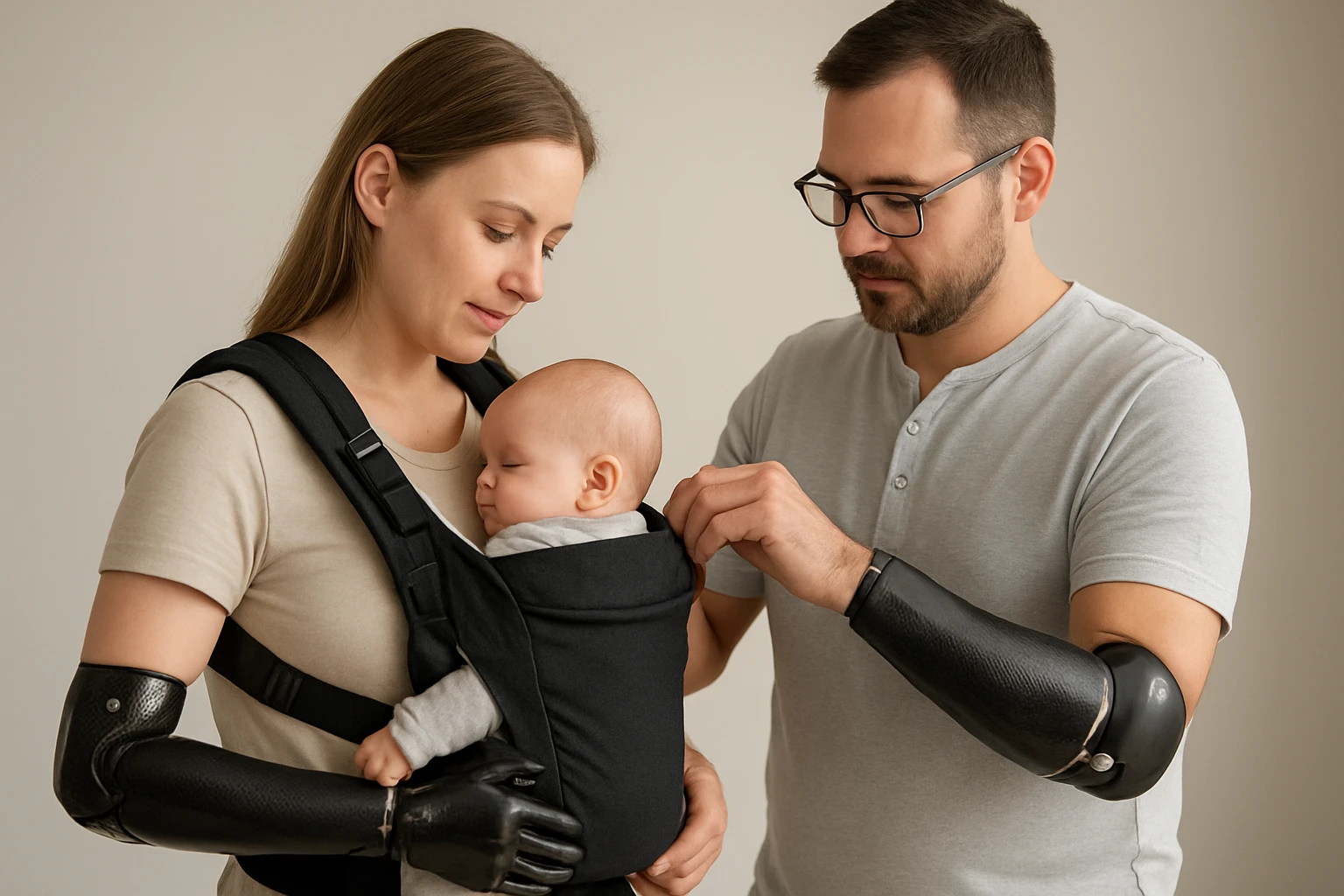
This guide explores adaptive babywearing for parents who use prosthetic limbs. Readers will learn foundational concepts, evaluate carrier options, and acquire practical strategies for safe and comfortable infant transport. The article balances theoretical knowledge with product recommendations that enhance independence and bonding. By the end of the guide, one will possess a clear plan for selecting and using a carrier that respects both the caregiver’s abilities and the baby’s development.
Background/Context
Babywearing has long been recognized for its benefits to infant physiology and caregiver bonding. For parents with prosthetic limbs, traditional carriers may present challenges related to balance, grip strength, and weight distribution. Understanding the anatomy of the hip, spine, and shoulder girdle is essential because proper positioning reduces strain on residual limbs and supports healthy hip development in the child. Moreover, modern carriers incorporate ergonomic designs, adjustable straps, and supportive waist systems that can accommodate a range of physical abilities.
Understanding Adaptive Babywearing
Adaptive babywearing involves selecting equipment that compensates for reduced limb function while preserving the natural "M" position for the infant. The "M" position aligns the hips in a flexed, abducted stance, which promotes healthy joint growth. Caregivers must also consider lumbar support, as prolonged carrying can exacerbate back discomfort, especially when prosthetic alignment alters posture. Finally, ease of donning and doffing is critical; a carrier that requires complex maneuvers may be impractical for a single‑handed user.
Selecting an Accessible Carrier
When evaluating carriers, three criteria dominate: ergonomic support, adjustable fit, and simplified fastening mechanisms. Ergonomic support includes waist belts with EVA foam or similar cushioning, which off‑loads weight from the shoulders and residual limb. Adjustable fit ensures the carrier can grow with the child from newborn to toddler, reducing the need for multiple purchases. Simplified fastening mechanisms—such as quick‑buckle systems or self‑tie wraps—allow a caregiver to secure the infant with one hand or minimal dexterity.
Using the Momcozy Baby Carrier
The Momcozy Baby Carrier offers an X‑shaped back design that distributes weight evenly across the torso. Its built‑in EVA waist support provides lumbar reinforcement, which is valuable for prosthetic users who may experience altered balance. The carrier includes three sizing positions, enabling a seamless transition from newborn to toddler without compromising the natural "M" position. The shoulder and waist straps are padded and easily adjustable, allowing a user to achieve a personalized fit while minimizing pressure on a prosthetic socket.
Key specifications include a 100% cotton lining and shell, a foam‑polyester‑polyurethane blend for strap cushioning, and an OEKO‑TEX certification that guarantees skin‑friendly materials. At a price of $50.99, the carrier holds a 4.5‑star rating based on 4,986 reviews, reflecting broad consumer satisfaction. Positive customer sentiment highlights the carrier’s breathable mesh, lumbar support, and effortless adjustment—features that align with the needs of prosthetic parents.
Using the KeaBabies Baby Wrap Carrier
The KeaBabies Baby Wrap Carrier employs a self‑tie wrap system that can be customized to accommodate asymmetrical body shapes. Because the wrap distributes weight across the torso rather than relying solely on shoulder straps, it reduces strain on a prosthetic arm. The fabric is soft, stretchy, and breathable, which prevents overheating during extended wear. Additionally, the carrier is certified by the International Hip Dysplasia Institute, ensuring that the infant maintains healthy hip alignment.
With a price of $29.96 and a 4.5‑star rating from 28,070 reviews, the wrap is an economical option for caregivers seeking a versatile solution. Users praise its ease of adjustment after the initial learning curve, noting that once secured, the carrier remains stable without constant readjustment—a critical advantage for individuals with limited hand function.
Using the GROWNSY Baby Carrier
The GROWNSY Baby Carrier combines a quick‑buckle system with a wrap‑style feel, delivering both convenience and ergonomic support. Its integrated EVA waist cushioning mirrors the lumbar reinforcement found in the Momcozy model, while the foldable head and neck support pad safeguards a newborn’s delicate cervical area. The carrier’s design promotes the natural "M" position, and the adjustable straps can be tightened with one hand, making it suitable for prosthetic users.
Priced at $43.67 and carrying a 4.5‑star rating from 1,035 reviews, the GROWNSY carrier receives commendations for its soft yet supportive fabric and its low‑profile buckles that do not interfere with prosthetic sockets. Reviewers frequently mention the carrier’s lightweight construction, which reduces overall load on the caregiver.
Comparison/Selection Guide
| Feature | Momcozy Baby Carrier | KeaBabies Baby Wrap Carrier | GROWNSY Baby Carrier |
|---|---|---|---|
| Price | $50.99 | $29.96 | $43.67 |
| Rating | 4.5/5 (4,986 reviews) | 4.5/5 (28,070 reviews) | 4.5/5 (1,035 reviews) |
| Weight Distribution | X‑shaped back, EVA waist | Self‑tie wrap, torso spread | Quick‑buckle, EVA waist |
| Adjustability | Three sizing positions | Fully adjustable wrap | Multiple buckle points |
| Material | 100% cotton, foam blend | Breathable stretchy fabric | Soft breathable fabric with head support |
Parents with prosthetic limbs should prioritize carriers that minimize reliance on a single shoulder and provide robust lumbar support. The Momcozy and GROWNSY models excel in waist cushioning, while the KeaBabies wrap excels in torso weight distribution. Budget considerations may favor the KeaBabies wrap, but caregivers requiring rapid donning may prefer the quick‑buckle design of the GROWNSY carrier.
Best Practices & Tips
- Begin with the carrier on a stable surface and practice securing the infant before leaving the house.
- Adjust waist and shoulder straps while standing upright to ensure even weight distribution.
- Engage core muscles to support the spine; this reduces reliance on the prosthetic limb for balance.
- Check the infant’s hip position frequently; the thighs should form a gentle “M” shape.
- Use a lint roller on cotton carriers to maintain fabric integrity and reduce skin irritation.
- When using a wrap, secure the knot in a location that does not interfere with prosthetic sockets.
FAQ
- Can I use a traditional sling if I have a prosthetic arm? Yes, but a sling that distributes weight across the torso, such as the KeaBabies wrap, reduces strain on a single arm.
- What if I experience back pain while babywearing? Ensure the carrier includes lumbar support, adjust the waist belt snugly, and limit carrying time to short intervals until strength builds.
- Are there carriers that accommodate a prosthetic leg? Carriers with wide waist belts and adjustable hip straps, like the Momcozy and GROWNSY models, can be worn over a prosthetic leg without discomfort.
- How do I keep the carrier clean when I have limited hand dexterity? Choose carriers with removable, machine‑washable liners; cotton fabrics are easy to launder and dry.
- Is it safe to wear my baby while using a mobility aid? Yes, provided the carrier is securely fastened and the caregiver maintains a stable stance; many users combine a carrier with a cane or walker.
Conclusion
Adaptive babywearing empowers parents with prosthetic limbs to maintain close physical contact with their infants while safeguarding their own musculoskeletal health. By selecting an ergonomic carrier, adjusting fit meticulously, and following best‑practice guidelines, caregivers can achieve safe, comfortable, and accessible infant transport. The products highlighted in this guide each address distinct needs, allowing one to match personal ability with the most suitable design.
Products Featured in This Guide
Momcozy Baby Carrier
Price: $50.99 | Rating: 4.5/5 (4,986 reviews)
Featured for its X‑shaped back, EVA waist support, and three‑position adjustability that aid prosthetic users in achieving balanced weight distribution.
KeaBabies Baby Wrap Carrier
Price: $29.96 | Rating: 4.5/5 (28,070 reviews)
Featured for its self‑tie design that spreads weight across the torso, breathable stretchy fabric, and certification for healthy hip development.
GROWNSY Baby Carrier
Price: $43.67 | Rating: 4.5/5 (1,035 reviews)
Featured for its quick‑buckle system, EVA waist cushioning, and foldable head‑neck support pad that together provide ease of use for prosthetic caregivers.
Frequently Asked Questions
What adaptive baby carriers are best for parents with prosthetic limbs?
Look for carriers with adjustable waist belts, detachable shoulder straps, and easy‑release buckles that allow one‑handed fastening and balanced weight distribution.
How can I ensure safe hip positioning for my baby while using an adaptive carrier?
Choose a carrier that supports the baby’s hips in an “M” shape, with thighs spread and knees higher than the bottom, and adjust the straps to keep the infant’s spine aligned.
Can I use a standard baby carrier if I have a prosthetic arm?
Standard carriers may work if they have removable or reversible straps, but many parents find ergonomic, prosthetic‑friendly models more reliable for grip and balance.
What tips help prevent strain on my residual limb while babywearing?
Distribute the carrier’s weight across your torso, use a padded waist belt, and keep the baby close to your chest to minimize torque on the prosthetic side.
Are there specific safety checks before each babywearing session?
Yes—inspect all buckles, ensure straps are snug but not restrictive, verify the baby’s airway is clear, and confirm the carrier’s weight limit exceeds your infant’s current weight.