
Introduction
Parents who practice babywearing often experience fatigue, rounded shoulders, and lower‑back discomfort. This guide explains eight quick exercises that strengthen core muscles, open the chest, and promote spinal alignment while the baby remains securely in a carrier. By following these steps, one can protect personal health, enhance bonding time, and enjoy daily activities without pain.
The exercises are designed for busy schedules; each can be performed in five minutes or less. The guide also integrates two highly rated Infantino carriers that simplify proper positioning and reduce strain. Readers will finish with a clear plan for maintaining posture, troubleshooting common issues, and accessing recommended tools.
What You'll Need
- A convertible baby carrier such as the Infantino Flip 4-in-1 Baby Carrier or the Infantino Flip Luxe Baby Carrier.
- A firm, flat surface for floor‑based stretches.
- A supportive pair of shoes with good arch support.
- A water bottle to stay hydrated.
Step 1: Adjust the Carrier for a Neutral Spine
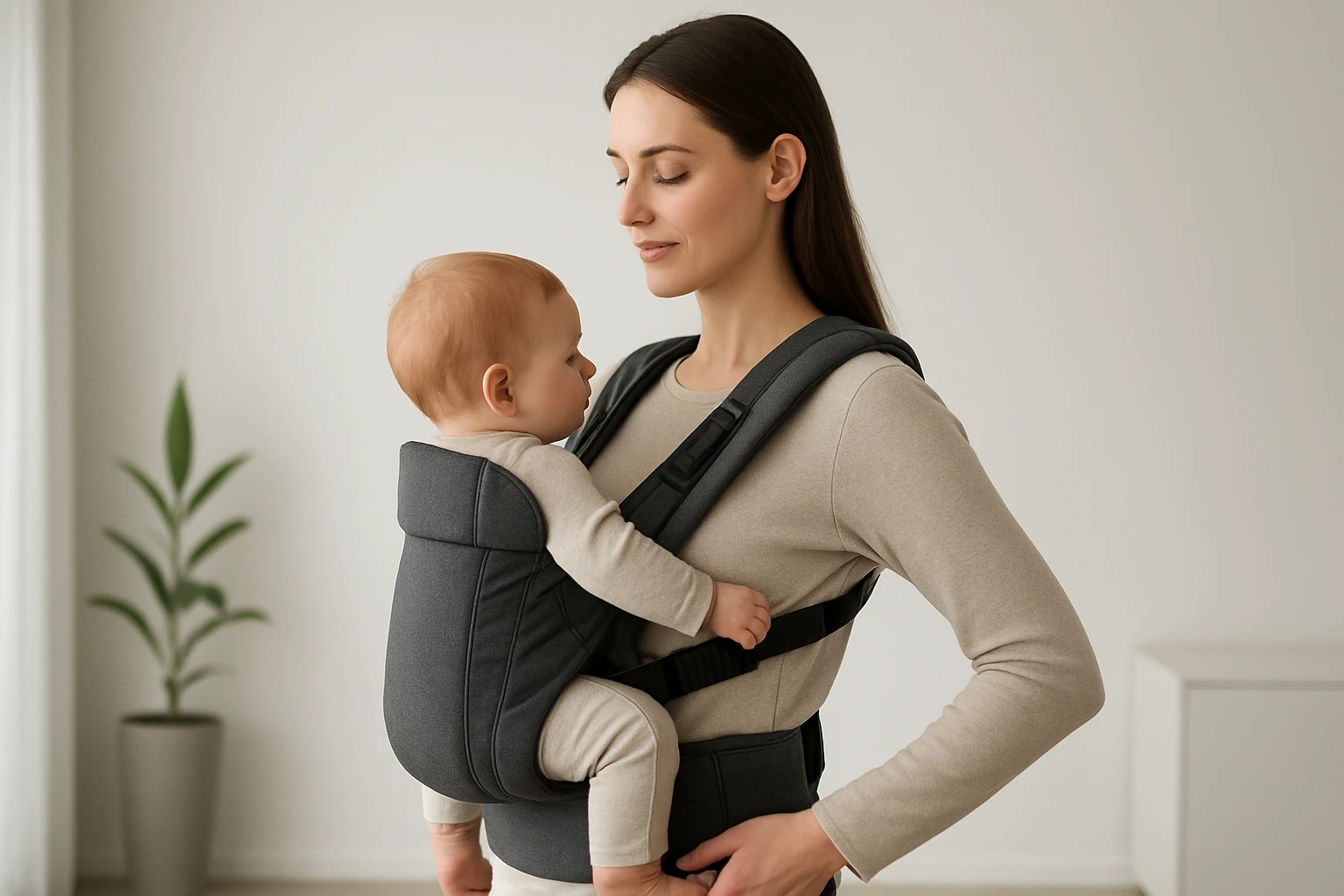
Begin by placing the baby in the carrier using the facing‑in position. Pull the waist belt snugly around the hips, then tighten the shoulder straps so that the baby’s weight rests evenly across the shoulders and hips. The carrier should sit high on the chest, allowing the spine to remain in a neutral, elongated position.
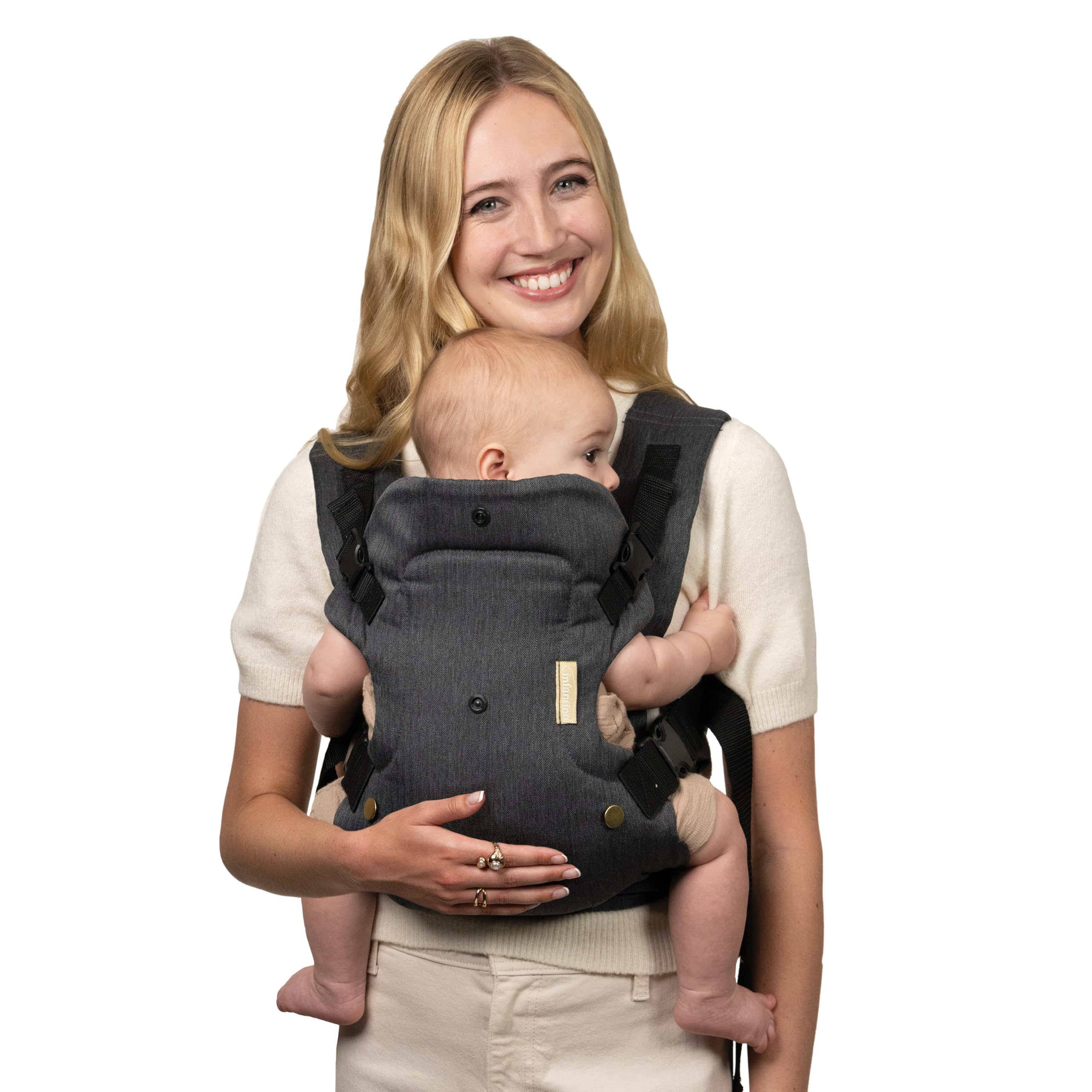
The Infantino Flip 4-in-1 Baby Carrier features padded shoulder straps and a wide waist belt that distribute weight, reducing the tendency to hunch forward. It costs $29.15 and holds a rating of 4.6 out of 5 from over 81,000 reviewers, indicating reliable comfort for both parent and baby.
For parents seeking additional lumbar support, the Infantino Flip Luxe Baby Carrier includes an enhanced lumbar belt that promotes proper spinal curvature. Priced at $39.99 with the same 4.6 rating, this model offers a premium herringbone fabric and refined accents while maintaining ergonomic benefits.
After securing the carrier, stand tall, engage the core, and verify that the baby’s hips are positioned in an “M” shape, which supports healthy joint development and parental posture.
Step 2: Core Activation – Standing Pelvic Tilts
With the carrier on, place hands on the lower abdomen. Inhale deeply, then exhale while gently tilting the pelvis posteriorly, flattening the lower back against the abdomen. Hold for three seconds, then return to neutral. Perform ten repetitions.
This movement trains the transverse abdominis to brace the spine, preventing excessive lumbar lordosis caused by the carrier’s weight. Maintaining a strong core reduces the load on the lower back during prolonged walks.
Do not rush the breath; a controlled exhalation maximizes muscle engagement. If balance feels unstable, shift weight slightly onto the supporting foot while keeping the shoulders relaxed.
Step 3: Shoulder Blade Squeezes
While standing, draw the shoulder blades together as if trying to hold a pencil between them. Keep the elbows relaxed and maintain the carrier’s straps. Hold for five seconds, then release. Complete twelve repetitions.
Rounded shoulders are a common complaint among babywearers. This exercise re‑educates the upper back muscles, counteracting the forward pull of the carrier straps. Consistent practice opens the chest and improves breathing capacity.
For added feedback, one may lightly place a small towel between the shoulder blades; the towel should lift as the blades squeeze together, providing a tactile cue.
Step 4: Pelvic Stability – Single‑Leg Balance
Shift weight onto the left foot while keeping the right foot slightly lifted. Maintain the carrier’s position and keep the hips level. Hold for ten seconds, then switch sides. Perform three sets per side.
Single‑leg balance engages the gluteus medius and deep core stabilizers, which are essential for maintaining pelvic alignment while carrying a baby. Strengthening these muscles helps prevent compensatory tilting that can lead to hip or knee discomfort.
If balance is challenging, hold onto a sturdy chair for support, but avoid leaning forward as this defeats the purpose of the exercise.
Step 5: Cat‑Cow Stretch on All Fours
Place hands directly under the shoulders and knees under the hips on a mat. Inhale, arch the back (cow), lifting the head and tailbone. Exhale, round the spine (cat), tucking the chin. Perform eight cycles.
This dynamic stretch mobilizes the thoracic spine, which often becomes stiff from prolonged forward flexion. The movement also encourages the diaphragm to move fully, supporting better posture and oxygen intake.
Perform the stretch slowly, synchronizing breath with motion. Avoid forcing the arch if lower back pain emerges; a gentle range is sufficient.
Step 6: Lateral Flexion – Standing Side Bends
Stand with feet hip‑width apart, carrier secured. Raise the right arm overhead and gently lean to the left, feeling a stretch along the right side of the torso. Hold for four seconds, then return to center. Repeat five times per side.
Lateral flexion opens the intercostal muscles and counteracts the lateral compression that can occur when a carrier pulls toward one shoulder. Balanced side bends promote symmetry in the rib cage and improve overall spinal health.
Maintain an even distribution of weight in the carrier; do not let the baby shift to one side during the stretch.
Step 7: Walking Lunges with the Carrier
Take a step forward with the right foot, lowering into a lunge while keeping the torso upright. Ensure the knee does not extend beyond the toes. Return to standing and repeat on the left side. Perform ten lunges per leg.
Walking lunges strengthen the quadriceps, hamstrings, and glutes, which support the pelvis and lower back during babywearing. The upright torso requirement reinforces proper spinal alignment throughout the movement.
If balance is an issue, perform the lunge near a wall for light support, but keep the carrier straps tight to avoid slippage.
Step 8: Cool‑Down – Deep Breathing and Gentle Neck Rolls
Conclude the routine by standing tall, inhaling through the nose for four counts, and exhaling through the mouth for six counts. Repeat five times. Follow with slow neck rolls, turning the head clockwise three times and then counter‑clockwise three times.
Deep breathing activates the parasympathetic nervous system, reducing tension accumulated during the exercises. Neck rolls release any residual stiffness in the cervical region, which often compensates for forward shoulder positioning.
Maintain the carrier throughout the cool‑down to reinforce the habit of holding the baby in a posture‑friendly manner.
Tips & Pro Tips
- Check the carrier straps before each session; loose straps increase the risk of slouching.
- Perform the routine at least three times per week to notice measurable improvements.
- Hydrate before and after exercising; dehydration can exacerbate muscle fatigue.
- Use a mirror to monitor spinal alignment while practicing the exercises.
- For parents with pre‑existing back conditions, consult a healthcare professional before beginning.
Troubleshooting
Problem: Persistent lower‑back ache after babywearing.
Solution: Verify that the carrier’s waist belt is positioned over the hips, not the abdomen. Adjust the shoulder straps so they rest on the shoulders rather than digging into the neck.
Problem: Shoulder pain during side bends.
Solution: Reduce the range of motion and focus on engaging the core before attempting deeper bends. Consider using the Infantino Flip 4-in-1 Baby Carrier, which offers padded straps that alleviate shoulder pressure.
Conclusion
By integrating these eight exercises into daily routines, busy parents can protect their spinal health while enjoying the convenience of babywearing. Proper carrier adjustment, core activation, and regular stretching create a synergistic effect that minimizes discomfort and enhances the bonding experience. Consistency and mindful posture will yield long‑term benefits for both caregiver and child.
Products Mentioned in This Guide


Frequently Asked Questions
What are the common posture problems caused by babywearing?
Typical issues include rounded shoulders, forward head posture, and lower‑back discomfort due to uneven weight distribution.
How long should each posture‑improving exercise take?
Each exercise is designed to be completed in five minutes or less, making them easy to fit into a busy day.
Can I do the exercises while my baby is in the carrier?
Yes, the routine is built for babywearing, so you can strengthen core and chest muscles while the baby stays safely secured.
Do I need a specific type of carrier for better spinal alignment?
A convertible carrier like the Infantino Flip 4‑in‑1 or Flip Luxe provides adjustable support that promotes proper alignment and reduces strain.
How often should I repeat the exercises to see results?
Perform the set daily or at least three times a week for consistent improvement in posture and comfort.