Introduction
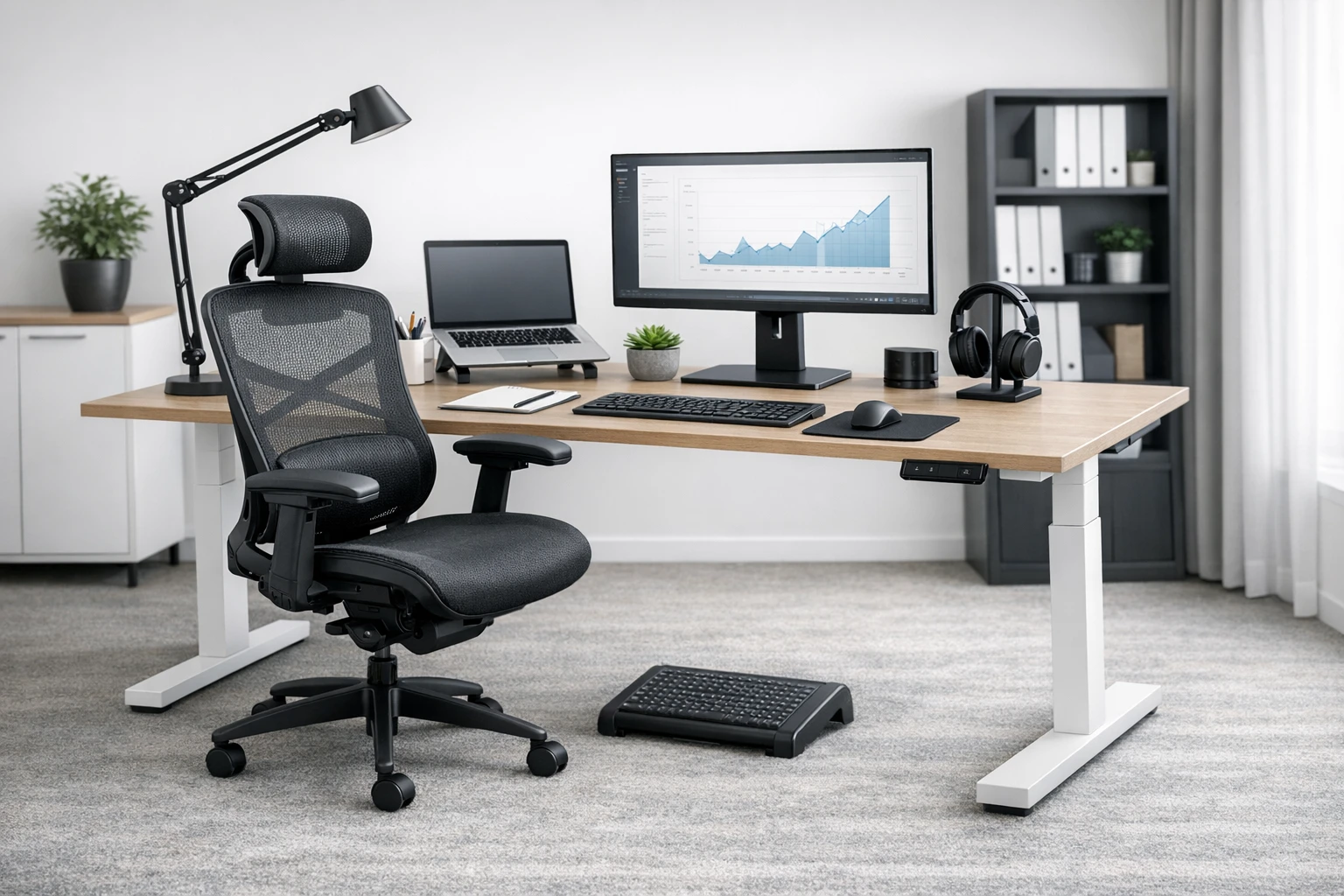
This guide explains how to create an ergonomic office environment that reduces strain, improves posture, and enhances productivity. Readers will learn how to assess space, select appropriate furniture, and integrate accessories that support long‑hour work sessions. The information is valuable because poor ergonomics can lead to musculoskeletal disorders, decreased focus, and higher long‑term health costs. By following the systematic steps, one can design a workspace that promotes comfort and efficiency.
What You'll Need
- Gabrylly Ergonomic Office Chair
- AODK Electric Standing Desk
- Monomi Adjustable Standing Desk
- Sushret Mousepad & Wrist Rest Set
- CushionCare Wrist Rest Set
1. Measure Your Workspace
The first step is to determine the dimensions of the area where the workstation will be placed. Measure width, depth, and ceiling height to ensure that any standing desk will clear overhead lighting and that the chair will fit beneath the desk when fully reclined. Record the distance from the wall to the nearest power outlet, as this influences cable management solutions. Accurate measurements prevent costly returns and allow for precise placement of ergonomic accessories.
2. Choose an Ergonomic Chair
When selecting a chair, prioritize lumbar support, adjustability, and load capacity. The Gabrylly Ergonomic Office Chair offers four supporting points—head, back, hips, and hands—plus a 3‑D headrest and flip‑up armrests that free desk space. Its breathable mesh back promotes airflow, reducing heat buildup during eight‑hour sessions. The chair supports up to 400 lb and features a 90‑120° tilt lock, allowing users to recline for brief rests without compromising posture. At $225.60 and a 4.4‑star rating from 14,075 reviews, it balances cost and quality, making it a solid choice compared with premium brands that exceed $1,000.
Installation requires approximately 15‑20 minutes; the included tools and clear instructions reduce assembly frustration. The PU mute wheels glide smoothly on wooden floors, preventing scratches while providing quiet movement. The three‑year warranty adds confidence for long‑term use.
3. Select a Standing Desk That Fits Your Needs
Standing desks should accommodate height range, storage, and power requirements. Two viable options are presented: the AODK Electric Standing Desk and the Monomi Adjustable Standing Desk. The AODK model measures 55 inches wide, includes two cloth drawers, a keyboard tray, built‑in power strip with three AC outlets and two USB ports, and LED lighting with 20 modes. Its height adjusts from 29.9" to 46.1" and features three memory presets, which is useful for users who share the desk with family members. Priced at $179.99 and rated 4.5 stars by 535 reviewers, it offers a comprehensive feature set for a moderate budget.
The Monomi desk provides a more industrial aesthetic with a 48" × 24" desktop and a steel alloy frame capable of supporting 178 lb. It includes four lockable wheels for easy relocation, a quiet motor operating below 45 dB, and three programmable height presets displayed on a digital screen. At $119.99 and a 4.6‑star rating from 2,481 reviews, it is the most affordable option for users who prioritize stability and portability. Both desks include cable management trays that hide wires, preserving a clean visual environment.
When deciding between them, consider the need for built‑in power and lighting (AODK) versus a lower price and robust construction (Monomi). Users who require extensive monitor real‑estate may appreciate the AODK’s larger surface, while those with limited floor space might favor the Monomi’s compact footprint.
4. Optimize Monitor Placement and Viewing Angle
After the desk and chair are positioned, adjust the monitor so that the top of the screen is at or slightly below eye level. The screen should be approximately an arm’s length away, typically 20‑30 inches, to reduce eye strain. If the desk includes a monitor shelf, place the monitor on the shelf to free up desktop space for documents and accessories. Use a monitor arm if the built‑in shelf is insufficient; this allows precise height and tilt adjustments without compromising desk stability.
Proper monitor placement works synergistically with the ergonomic chair’s lumbar support, as it encourages a neutral spine angle. Inadequate monitor height forces the user to tilt the head forward, increasing cervical load and negating the benefits of the chair’s adjustable headrest.
5. Add Wrist Support for Keyboard and Mouse
Extended typing and mouse use can cause wrist extension, leading to carpal tunnel syndrome. The Sushret Mousepad & Wrist Rest Set provides a breathable milk‑fiber surface, a gel‑enhanced memory foam layer, and an anti‑slip PU base. The set includes a palm rest for the keyboard, a mouse pad with wrist support, and a decorative coaster. Priced at $15.99 with a 4.7‑star rating from 307 reviews, it offers high‑quality comfort at a low cost.
For users who prefer a larger footprint or a different material feel, the CushionCare Wrist Rest Set supplies memory foam cushions, a free coaster, and a microfiber cleaning cloth. Its black design blends with most office aesthetics, and the rubber base prevents slipping. At $17.96 and a 4.6‑star rating from 5,843 reviews, it is a competitive alternative that emphasizes durability.
Both sets elevate the wrists to a neutral position, reducing strain on the forearm flexor muscles. Selecting one depends on personal preference for gel versus pure memory foam, as well as desired color coordination.
6. Arrange Cable Management and Power Access
Unmanaged cables create visual clutter and pose tripping hazards. Use the built‑in cable tray of the chosen standing desk, or attach a third‑party cable management box beneath the desk surface. Route power cords through the tray, and connect devices to the desk’s integrated power strip (AODK) or to a surge‑protected outlet if using the Monomi desk. Group USB charging cables together to keep the workspace tidy.
Proper cable organization also improves airflow around the computer components, which can extend hardware lifespan. Verify that the cable lengths are sufficient for the maximum desk height to avoid tension when the desk is raised.
7. Test and Refine Your Setup
After assembling the furniture and accessories, spend a full workday using the configuration. Observe any discomfort in the neck, shoulders, lower back, or wrists, and adjust seat height, lumbar support, or monitor angle accordingly. Most ergonomic chairs allow seat height adjustment in 1‑inch increments; set the seat so that the knees form a 90‑degree angle and feet rest flat on the floor.
If the standing desk feels unstable at full height, ensure the base is level and consider adding a floor mat to distribute weight evenly. For users who experience fatigue while standing, experiment with the desk’s memory presets to alternate between sitting and standing every 30‑45 minutes.
Tips & Pro Tips
- Position the chair’s backrest so that the lumbar curve aligns with the natural inward curve of the lower spine.
- Use a footrest when the chair height is above knee level to maintain proper circulation.
- Enable the desk’s height‑memory function to switch quickly between preferred sitting and standing positions.
- Keep the mousepad surface clean; dust can reduce glide efficiency and increase wrist effort.
- Schedule micro‑breaks every hour: stand, stretch, and walk for two minutes to promote blood flow.
Troubleshooting
Issue: Chair armrests interfere with desk edge.
Solution: Raise the armrests using the black buttons, or flip them up and slide the chair fully under the desk.
Issue: Standing desk motor makes noise at maximum height.
Solution: Verify that the desk is on a level surface, tighten any loose bolts, and ensure the weight does not exceed the manufacturer’s limit.
Issue: Wrist rest feels too soft after several hours.
Solution: Rotate the wrist pad to the opposite side, or replace the memory foam with a firmer gel‑infused version such as the Sushret upgraded option.
Conclusion
This step‑by‑step guide has demonstrated how to evaluate space, select an ergonomic chair, choose a suitable standing desk, and incorporate wrist support accessories. By following the outlined instructions, one can create a healthier workspace that minimizes strain, enhances focus, and supports long‑term productivity. Readers are encouraged to apply the principles, experiment with adjustments, and enjoy the benefits of an ergonomically optimized office.
Products Mentioned in This Guide
Frequently Asked Questions
What are the essential elements of an ergonomic office setup?
A supportive chair, an adjustable standing desk, proper monitor height, keyboard/mouse positioning, and wrist-friendly accessories.
How do I determine the correct height for my standing desk?
Set the desk so elbows form a 90-degree angle when typing and the monitor top is at eye level.
What features indicate a high‑quality ergonomic office chair?
Adjustable seat depth, lumbar support, height and tilt controls, and breathable, weight‑bearing material.
Why should I use a mousepad with a wrist rest?
It keeps the wrist in a neutral position, reducing pressure on tendons and preventing carpal tunnel strain.
How often should I change my posture or workstation setup?
Shift positions every 30‑60 minutes and re‑adjust ergonomics weekly to accommodate any changes in comfort or tasks.