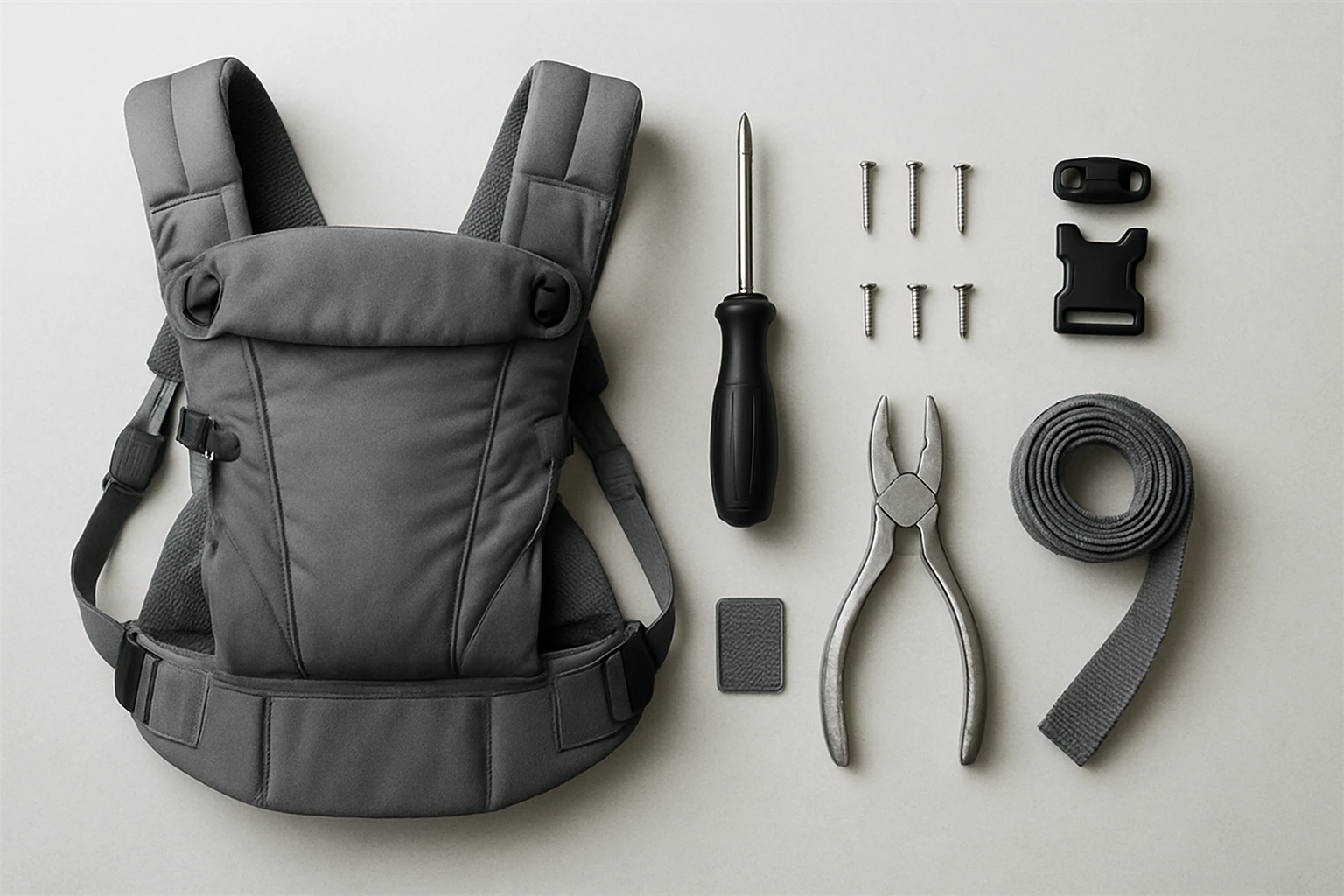
Backcountry Baby Carrier Repair Kit Checklist: The Ultimate Guide to Essential Tools, Spares & Quick Fixes
Introduction
Exploring remote trails with a baby carrier demands confidence in both comfort and reliability. One malfunctioning screw or a loose bracket can turn a joyful hike into a stressful rescue. This guide equips readers with the knowledge to assemble a comprehensive repair kit, understand the most common failure points, and apply swift fixes while on the move. By the end of the article, one will be able to select appropriate tools, maintain a ready‑to‑use spare inventory, and troubleshoot common issues without compromising safety.
Background & Context
Modern baby carriers are engineered from lightweight alloys, high‑strength polymers, and reinforced fabrics. While these materials excel in weight savings, they also introduce small, fast‑acting components such as screws, washers, and adjustment levers that can loosen under vibration or repeated folding. Understanding the mechanical architecture of a carrier—frame, harness, wheel assemblies (if applicable), and adjustment mechanisms—provides the foundation for effective repairs. In addition, awareness of the environment—temperature fluctuations, moisture, and rough terrain—helps anticipate which components are most vulnerable.
Key Concepts and Recommended Tools
1. Core Repair Kit Components
A well‑balanced repair kit contains three categories of items: replacement fasteners, specialized tools, and protective supplies. Replacement fasteners include screws of various diameters, washers, and specialty pads that match the carrier’s original hardware. Specialized tools comprise hex wrenches, small screwdrivers, and unique disassembly aids designed for stroller or carrier frames. Protective supplies such as silicone grease, zip‑lock bags, and a compact first‑aid pouch guard against corrosion and keep parts organized.
For most backcountry families, the SHITINGRM Stroller Repair Screw Set offers a comprehensive selection of screws, washers, and niche tools. Priced at $8.08 and rated 4.7/5.0, it includes 4 × screws with washers, flat mouth pads, inclined mouth pads, a brake key, parking hook, and dedicated disassembly tools for wheels and armrests. The set’s plastic‑plus‑metal construction ensures durability while remaining lightweight for backpack storage.
Alternatively, the kobeIeen Stroller Repair Screw Set provides a similar inventory at $5.94 with a perfect 5/5.0 rating. Its ABS‑plus‑metal composition offers resistance to impact and moisture, making it suitable for wet or cold conditions. Both kits list the same assortment of components, allowing users to choose based on brand preference or budget.
2. Essential Hand Tools
Beyond the supplied tools, a compact multi‑bit screwdriver with interchangeable heads (Phillips, flat‑head, Torx) is indispensable for adjusting harness buckles and frame brackets. A set of 2 mm to 5 mm hex keys covers the majority of screw sizes found on carrier frames. Including a small adjustable wrench can assist with larger bolts on wheel‑mounted carriers.
When selecting a screwdriver, prioritize a lightweight alloy body and an ergonomic grip to reduce hand fatigue during prolonged use. A magnetic tip prevents tiny screws from dropping into crevices—a frequent hazard on uneven terrain.
3. Protective and Maintenance Supplies
Silicone grease applied to screw threads reduces the risk of corrosion and eases future adjustments. Small zip‑lock bags protect washers and specialty pads from moisture, sand, and debris. A compact microfiber cloth assists in cleaning metal surfaces before reassembly, ensuring a secure fit.
Comparison & Selection Guide
Both repair kits share an extensive component list, yet subtle differences influence the optimal choice for a particular backcountry scenario.
| Feature | SHITINGRM Stroller Repair Screw Set | kobeIeen Stroller Repair Screw Set |
|---|---|---|
| Price | $8.08 | $5.94 |
| Average Rating | 4.7/5.0 | 5/5.0 |
| Material Composition | Plastic + Metal | ABS + Metal |
| Included Specialty Tools | Brake key, parking hook, arm‑rest disassembly tool, wheel disassembly tool | Same as SHITINGRM |
| Availability | In Stock | In Stock |
If budget constraints dominate the decision, the kobeIeen set offers a lower price while maintaining a flawless rating. For hikers who anticipate exposure to extreme temperatures, the SHITINGRM set’s plastic components may exhibit marginally better heat resistance. Both kits provide identical part counts, so the final selection often rests on brand trust and perceived quality.
Best Practices & Tips for On‑Trail Repairs
- Conduct a pre‑trip inspection of all screws and adjustment points; tighten any loose hardware before departure.
- Store the repair kit in a dedicated, waterproof pouch attached to the carrier’s external strap for quick access.
- When replacing a screw, apply a thin layer of silicone grease to the threads to prevent seizing.
- Label zip‑lock bags with the corresponding component (e.g., "Flat Mouth Pads") to streamline reassembly.
- Carry a small spare battery or power bank for electronic carriers that feature motorized folding mechanisms.
- Practice disassembly and reassembly of the most common fasteners at home; muscle memory reduces repair time in the field.
Frequently Asked Questions
What size screws are most commonly used in baby carriers?
Most carriers employ screws ranging from 2 mm to 5 mm in diameter, often with a shallow head to avoid snagging on clothing. The repair kits mentioned above cover this entire range.
Can I use the repair kit on a stroller that is not listed in the product description?
Both kits are marketed for "series strollers" and include a variety of adapters. However, it is advisable to verify the thread type and length against the carrier’s specifications before installation.
How often should I replace the washers and pads?
Washers and pads should be inspected after every 20‑30 hours of trail use or after exposure to wet conditions. Replace any that show signs of wear, cracking, or corrosion.
Is silicone grease safe for all carrier materials?
Silicone grease is compatible with most metals and polymers used in carriers. Avoid petroleum‑based lubricants on plastic components, as they can degrade the material over time.
Do these kits include tools for wheel‑mounted carriers?
Yes, both kits contain a front and rear wheel disassembly special tool, a brake key, and a parking hook, making them suitable for wheel‑equipped carriers as well as frame‑only models.
Conclusion
Equipping oneself with a thoughtfully assembled repair kit transforms a potential emergency into a manageable task. By understanding the mechanical layout of a baby carrier, selecting the appropriate fasteners, and maintaining a disciplined inspection routine, backcountry families can enjoy extended outings with confidence. The SHITINGRM and kobeIeen repair sets provide a solid foundation, while supplemental tools and best‑practice habits ensure readiness for any unforeseen challenge.
Products Featured in This Guide
SHITINGRM Stroller Repair Screw Set
Price: $8.08 | Rating: 4.7/5.0
Featured because it offers a comprehensive assortment of screws, washers, and specialized disassembly tools in a compact, lightweight package suitable for backcountry use.
kobeIeen Stroller Repair Screw Set
Price: $5.94 | Rating: 5/5.0
Featured for its budget‑friendly price, flawless rating, and durable ABS‑plus‑metal construction that resists moisture and impact on rugged trails.